Goats for Grang
Travelogue
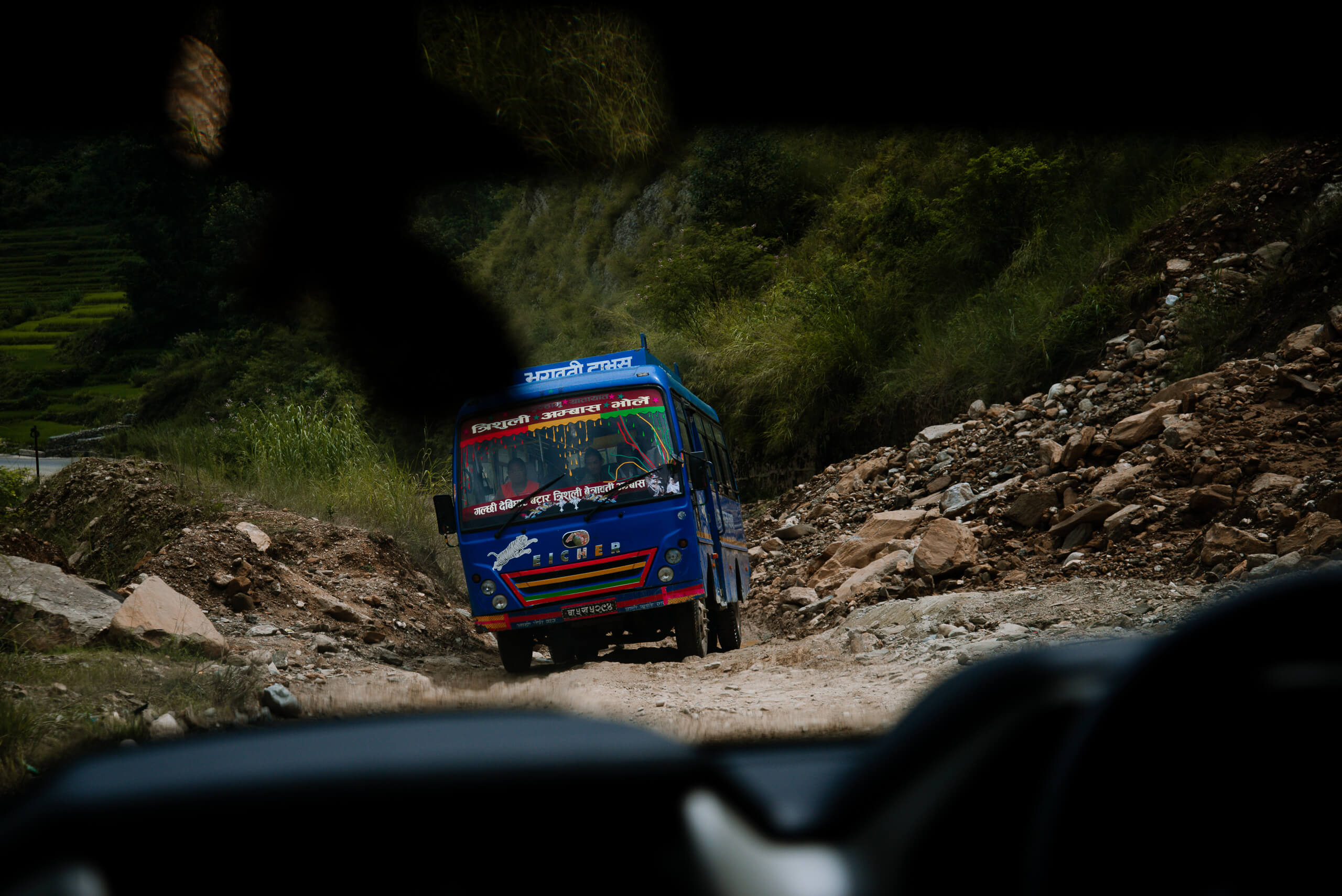
We set off from Kathmandu at 6 a.m. The Nepali Highway winds its way along the hills. After about 50 km, we turned off towards Langtang Valley. The next 60 km were to be on roads that weren't in such good condition. Unfortunately, after a relatively short drive, a landslide blocked the road, forcing us to take the alternative route between Bidur and Betrtawoti Bazaar – a route that hardly deserved the name "road" anymore. The track was narrow and unpaved, consisting only of clay and gravel. Thanks to the rainy season, there were numerous deep puddles, making progress very slow.
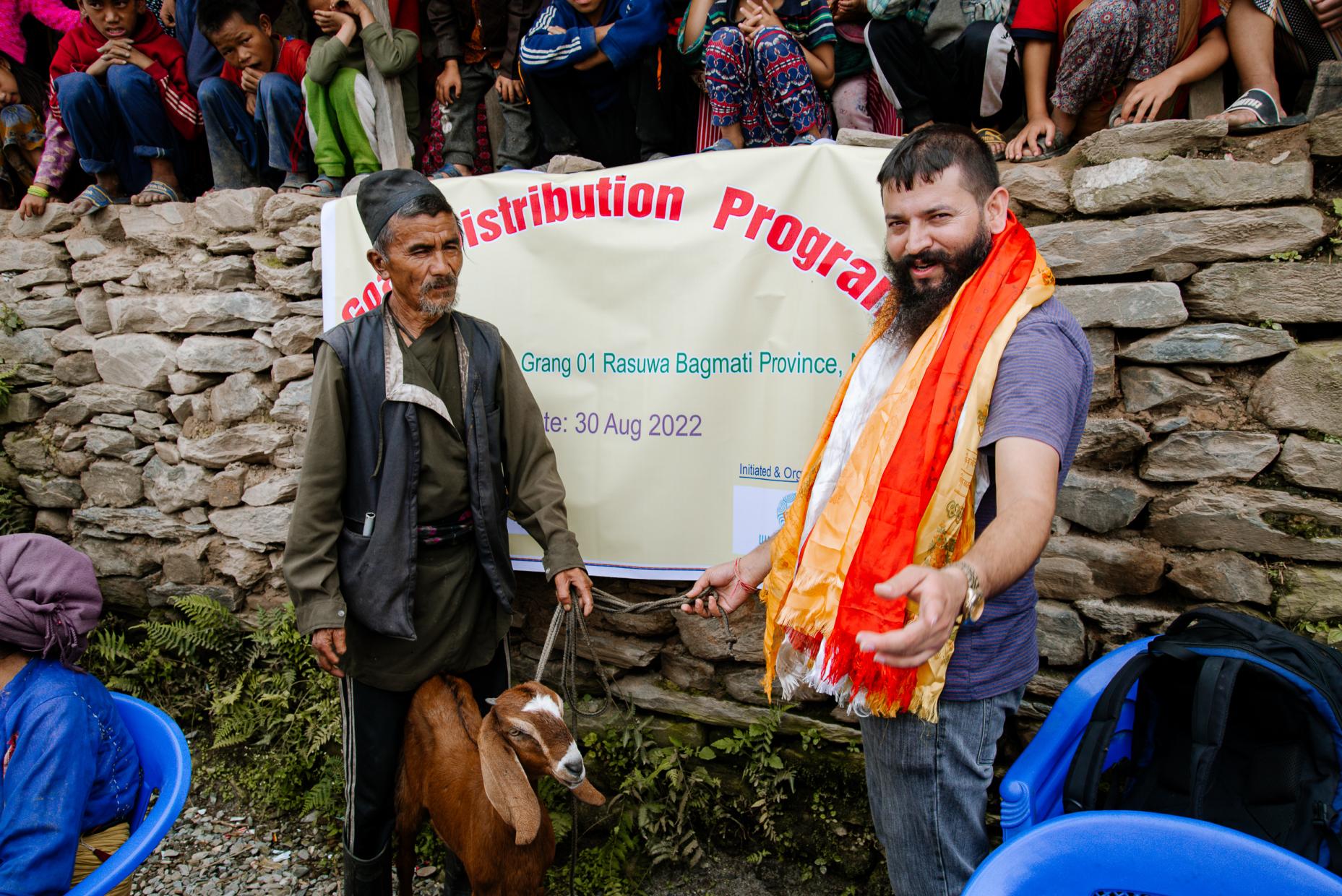
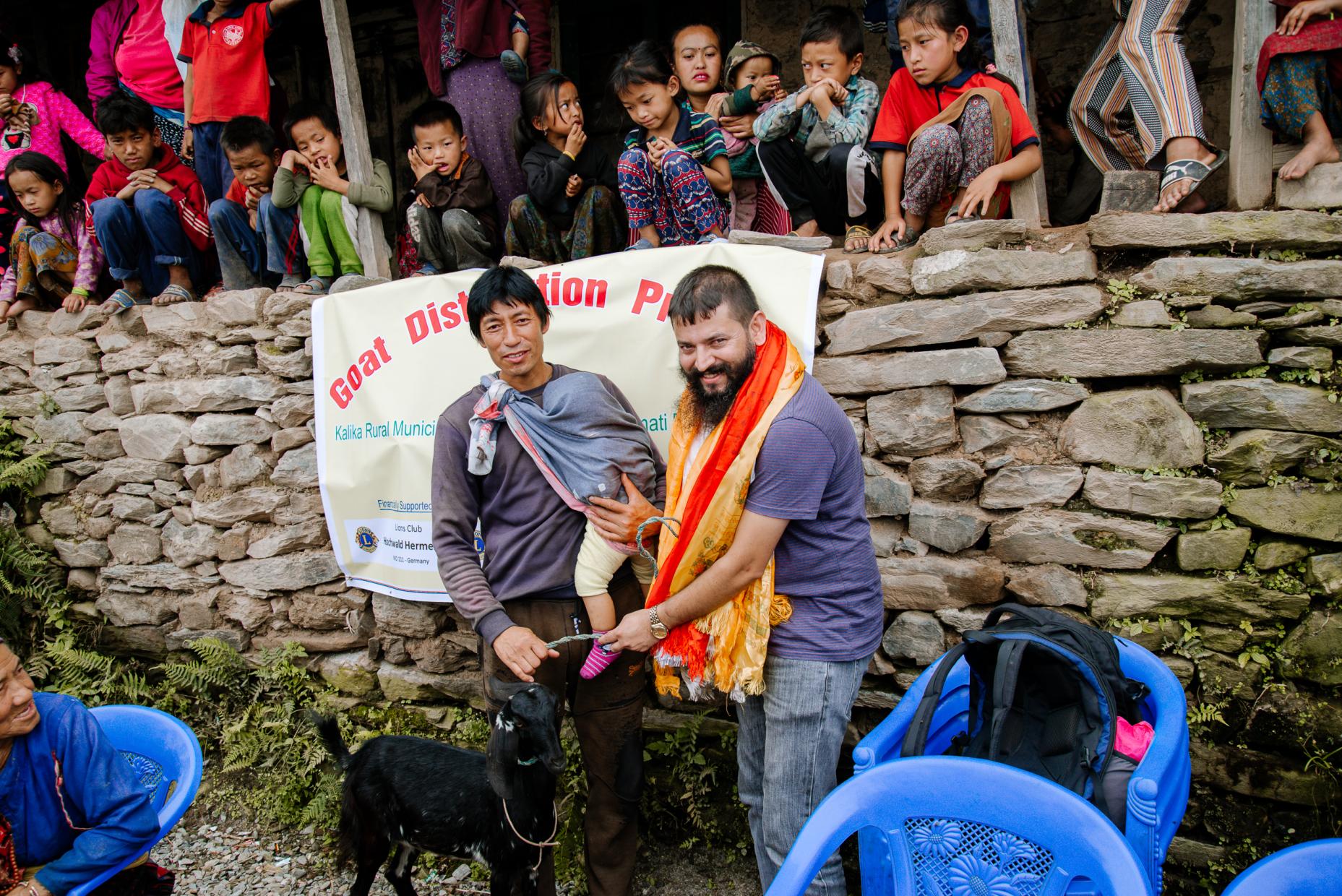
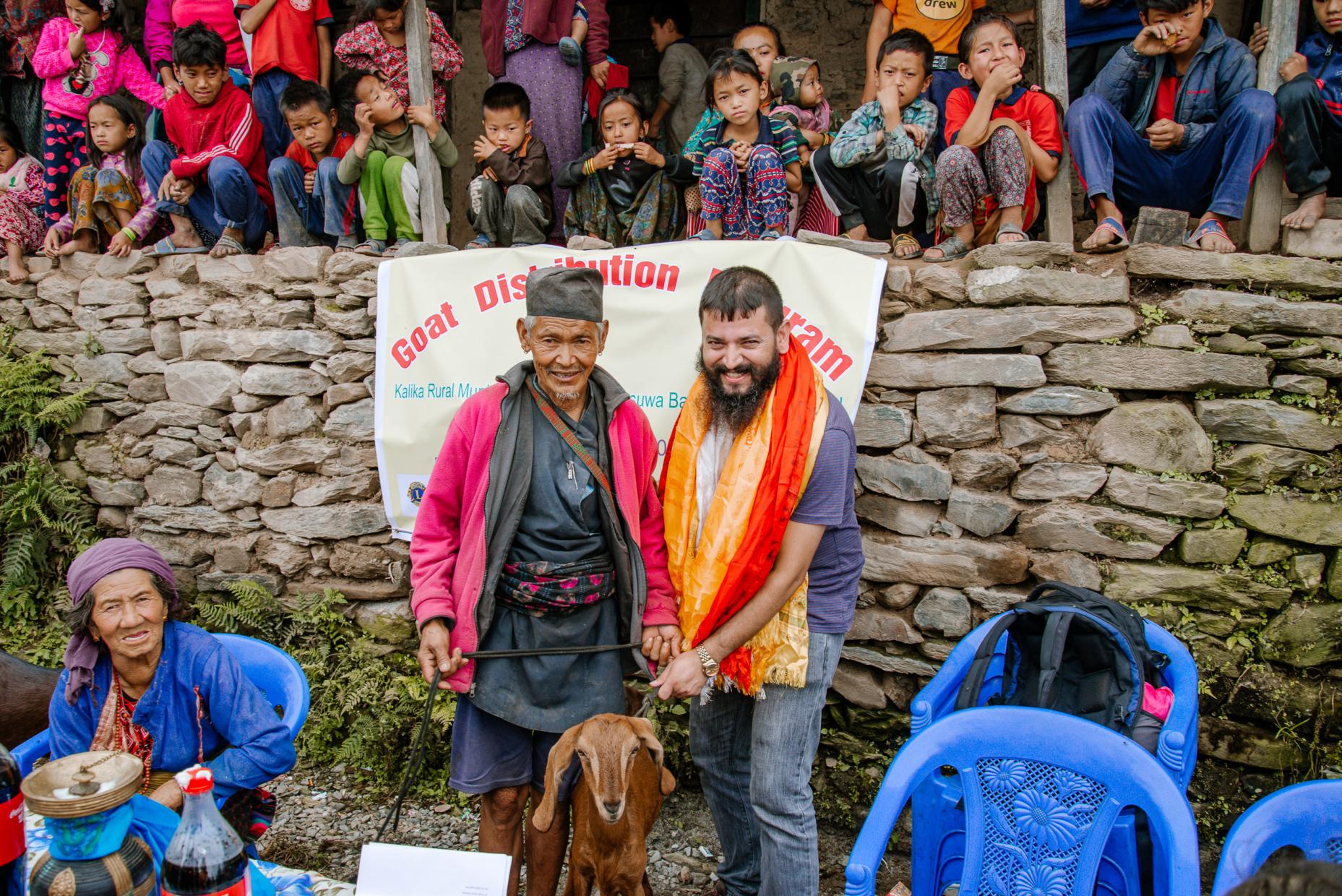
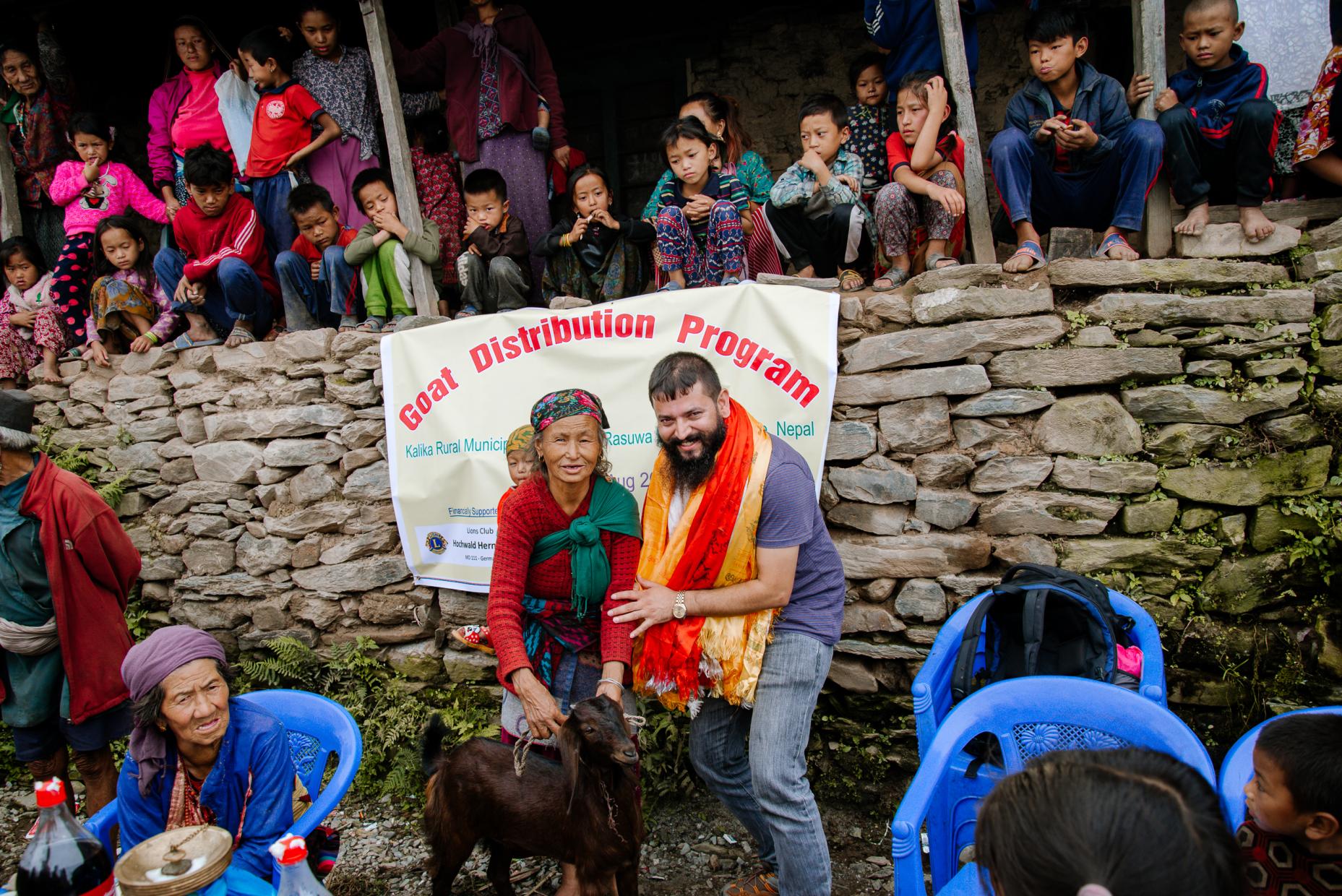
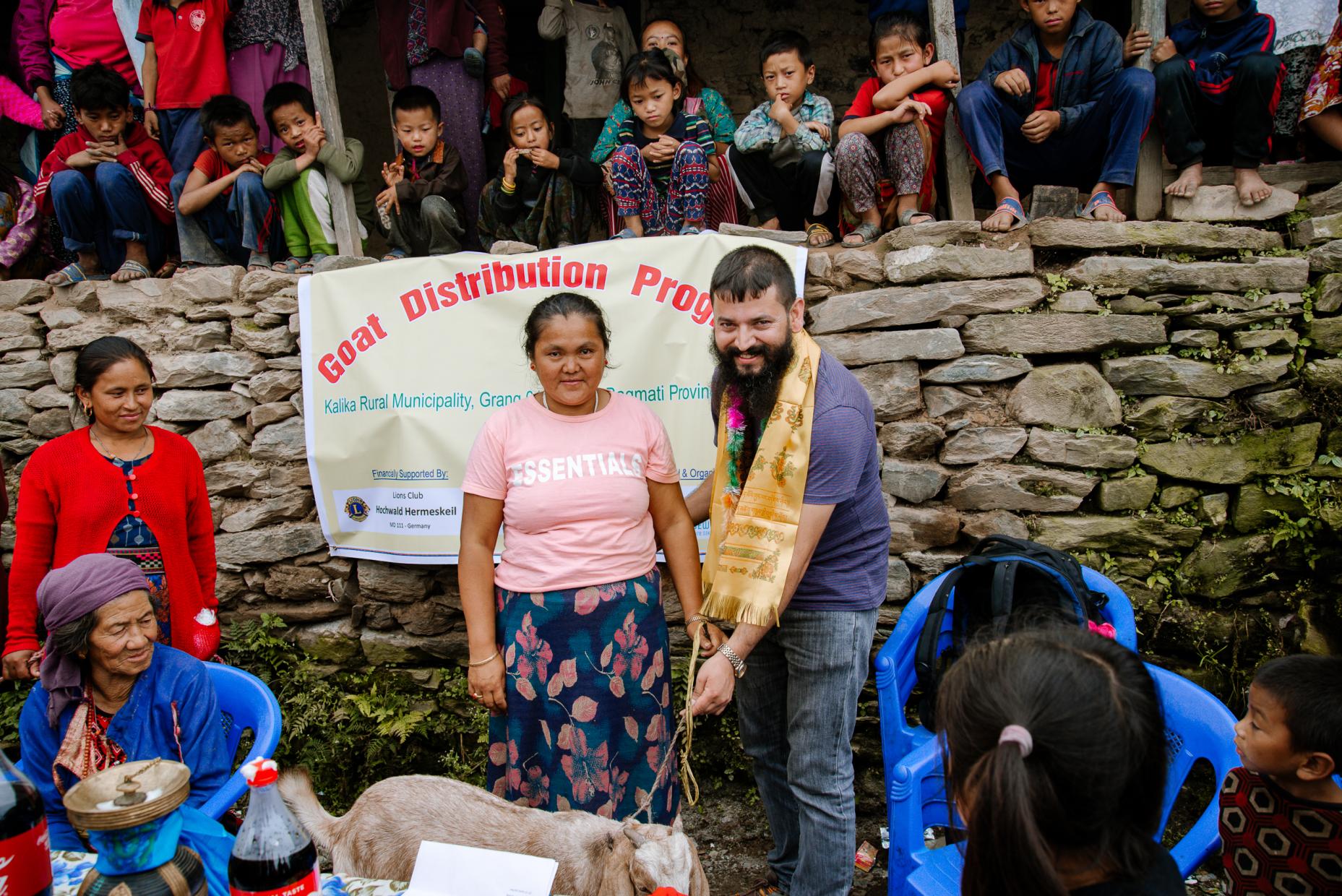
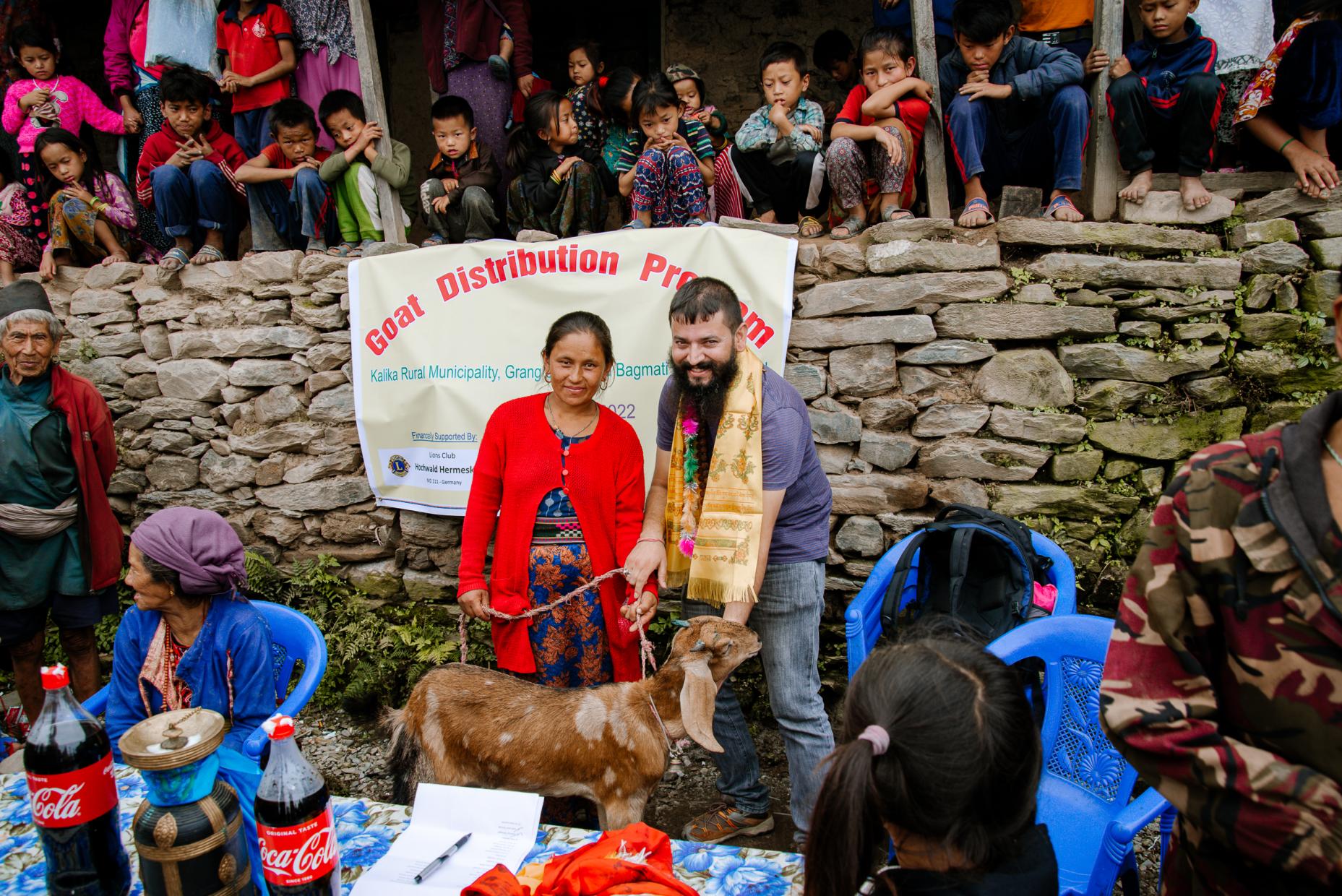
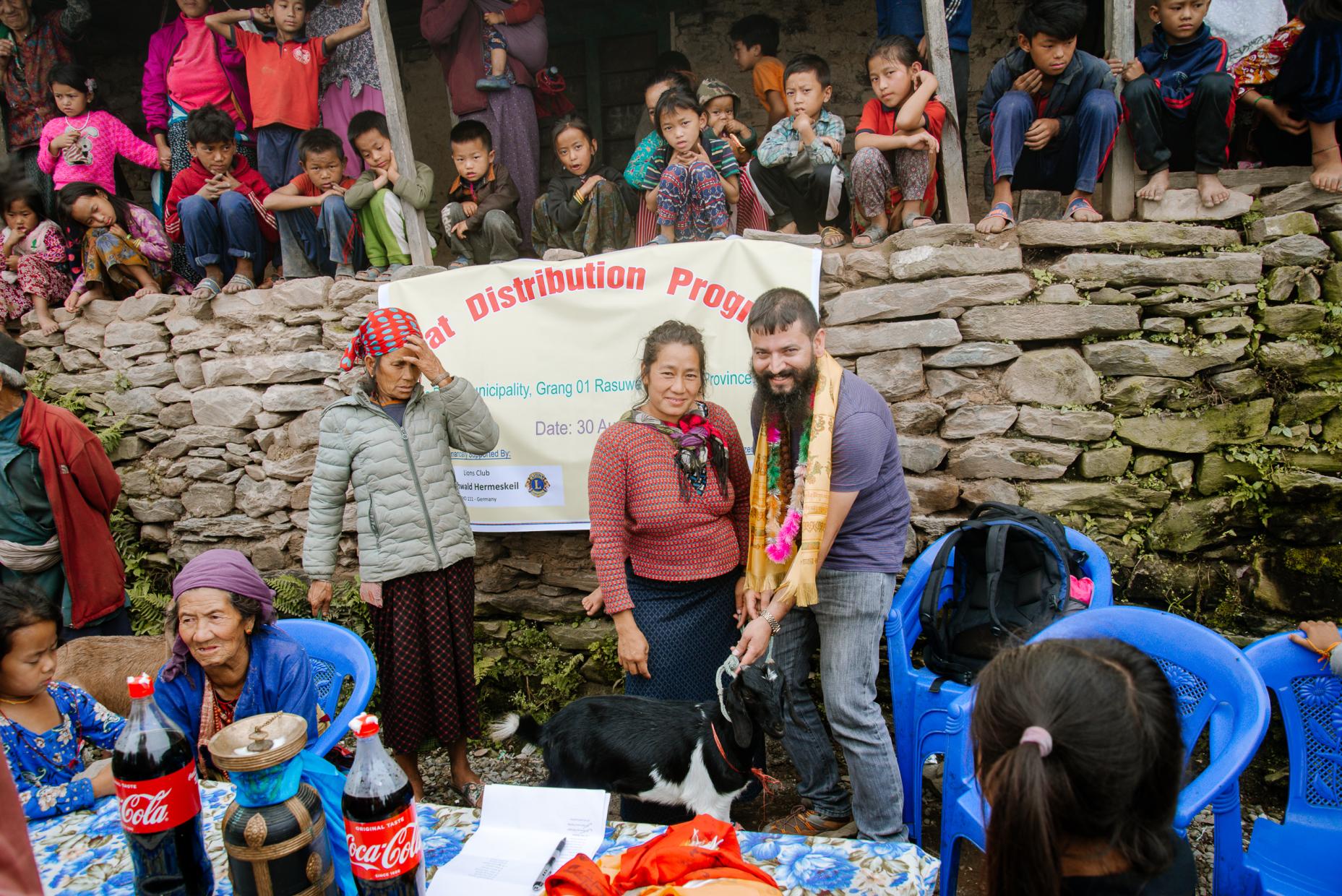
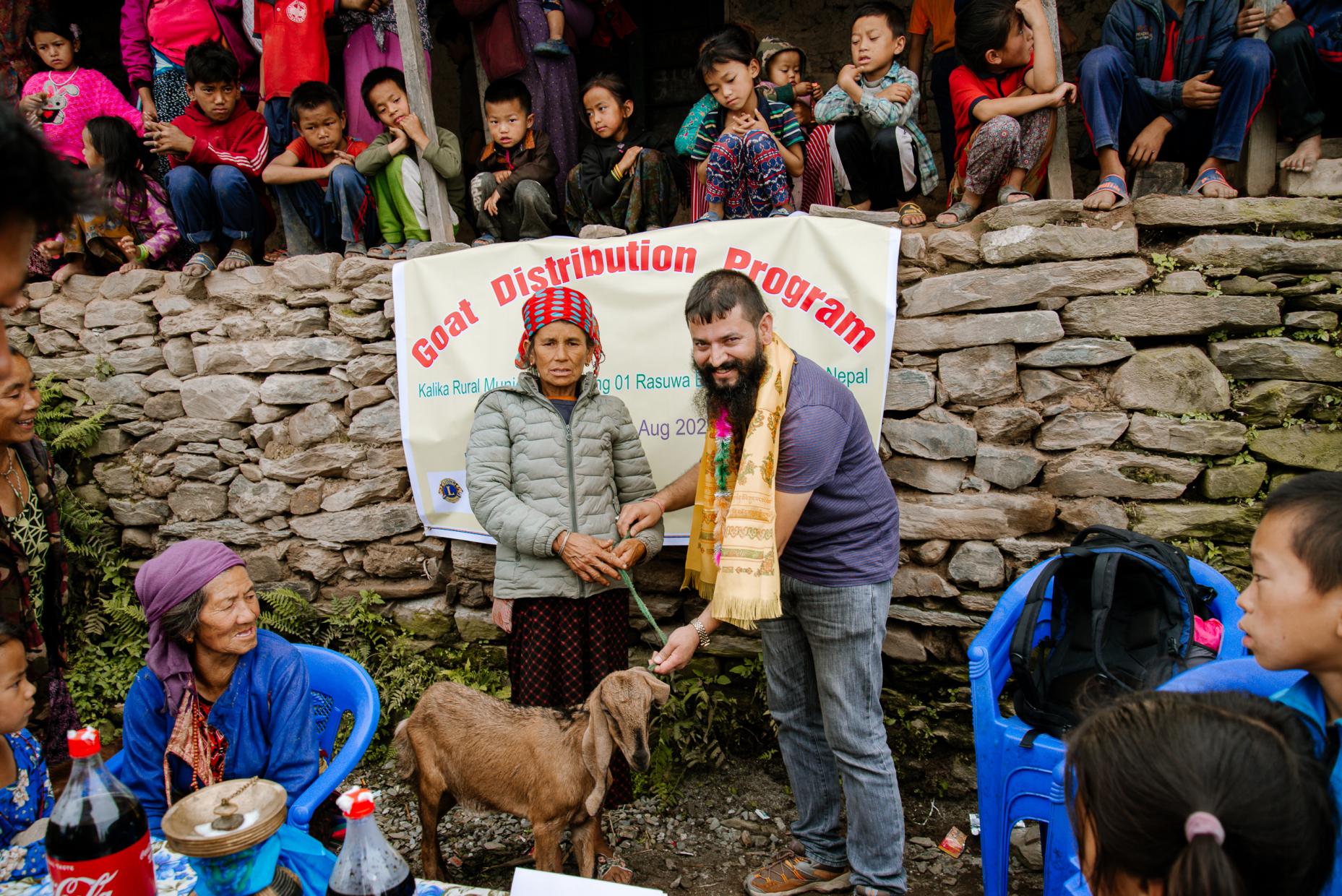
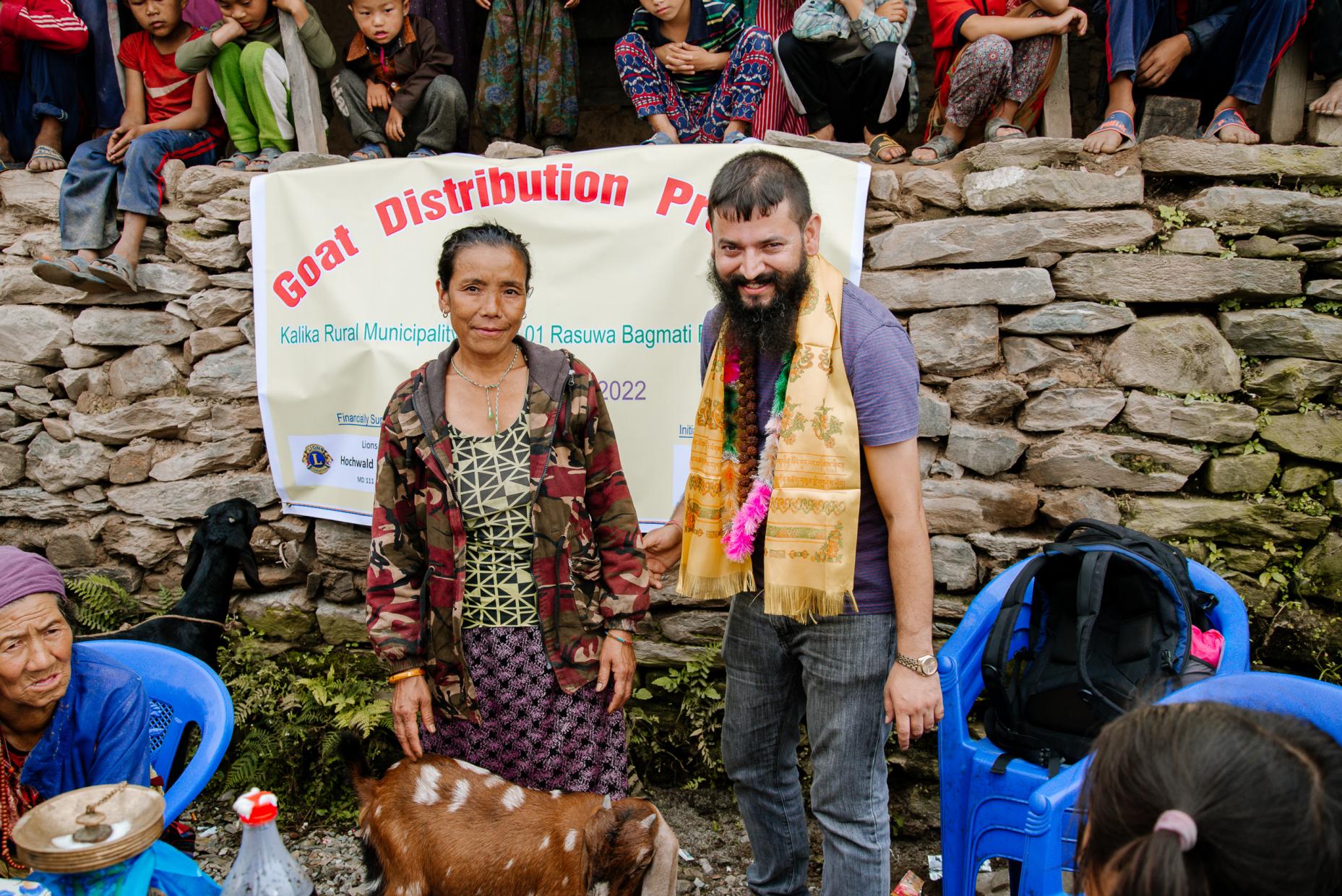
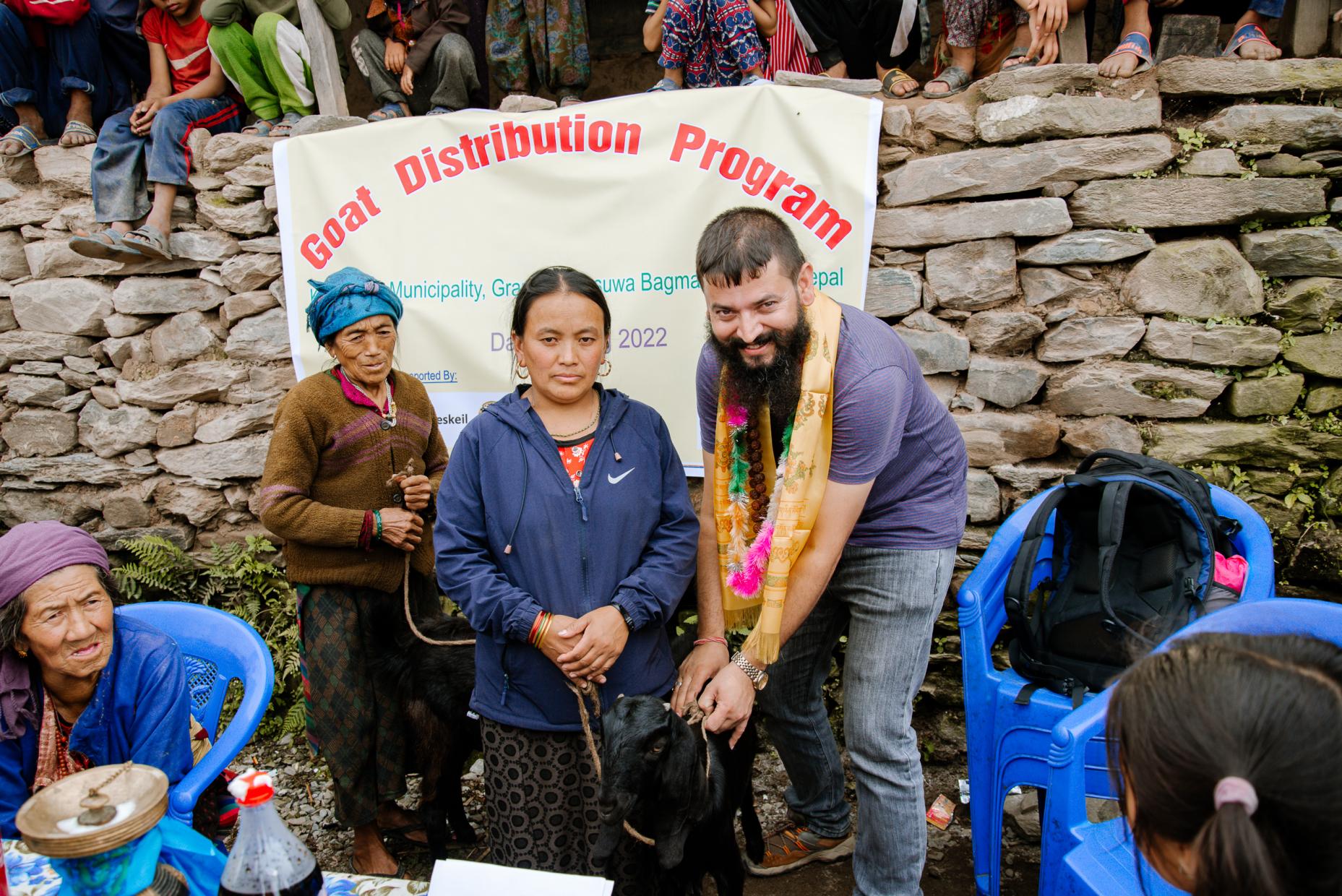
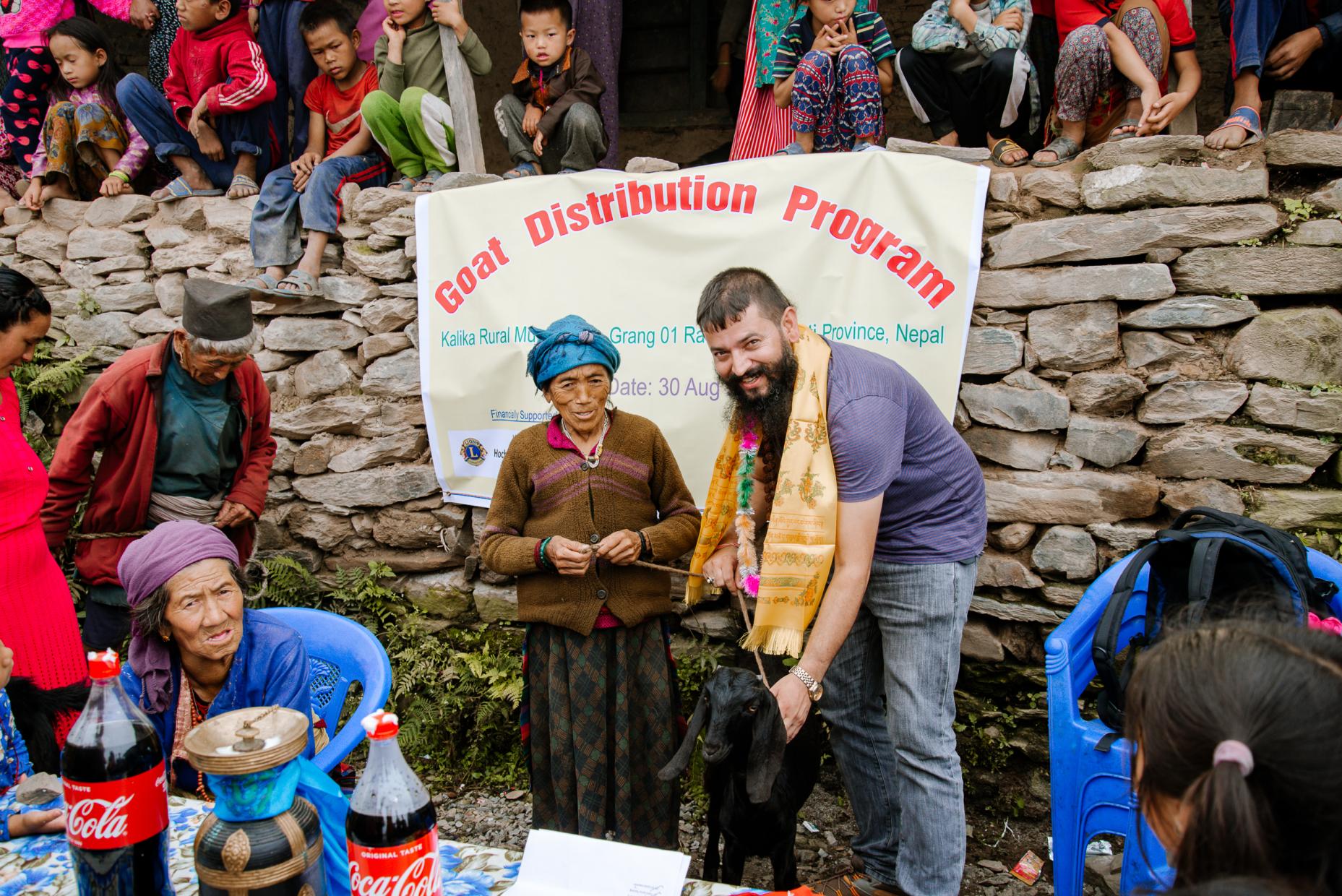
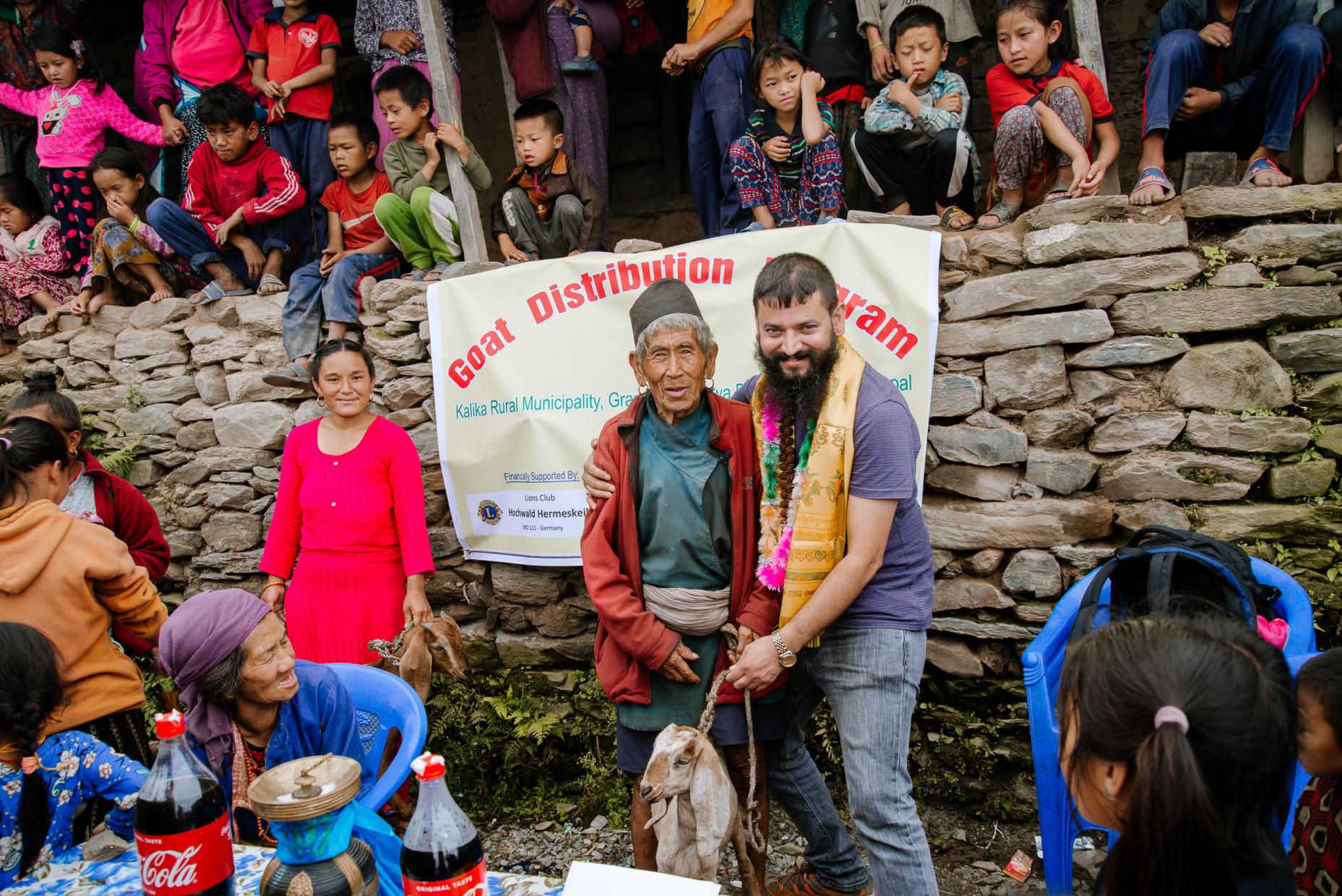
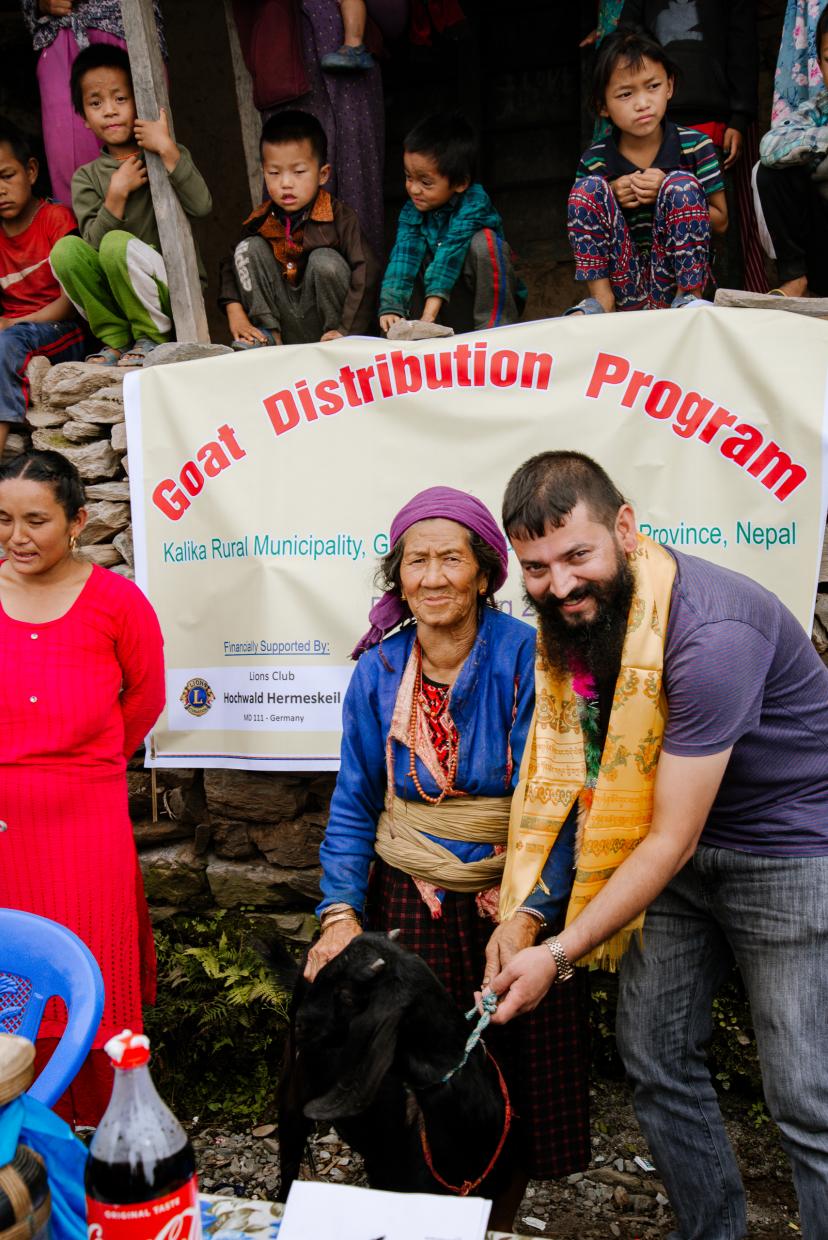
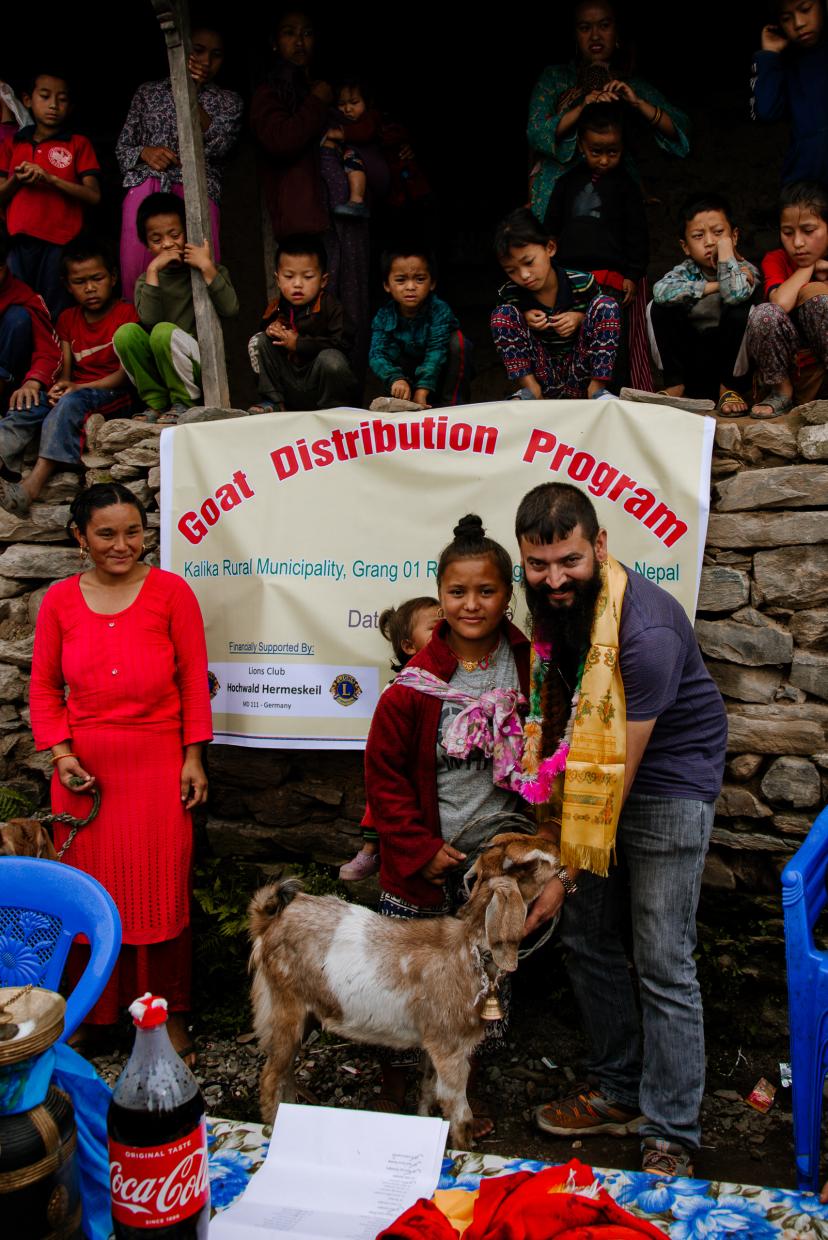
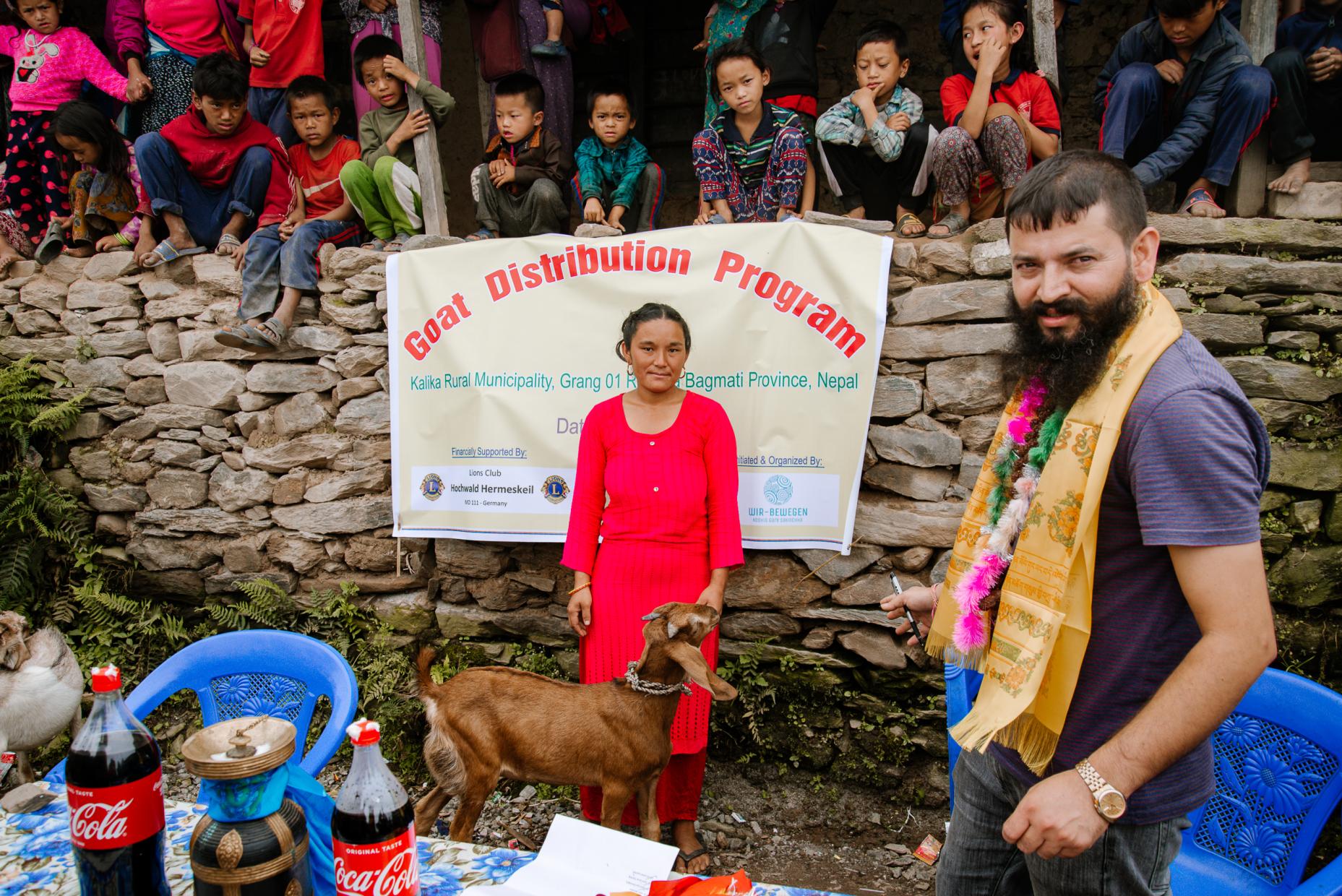
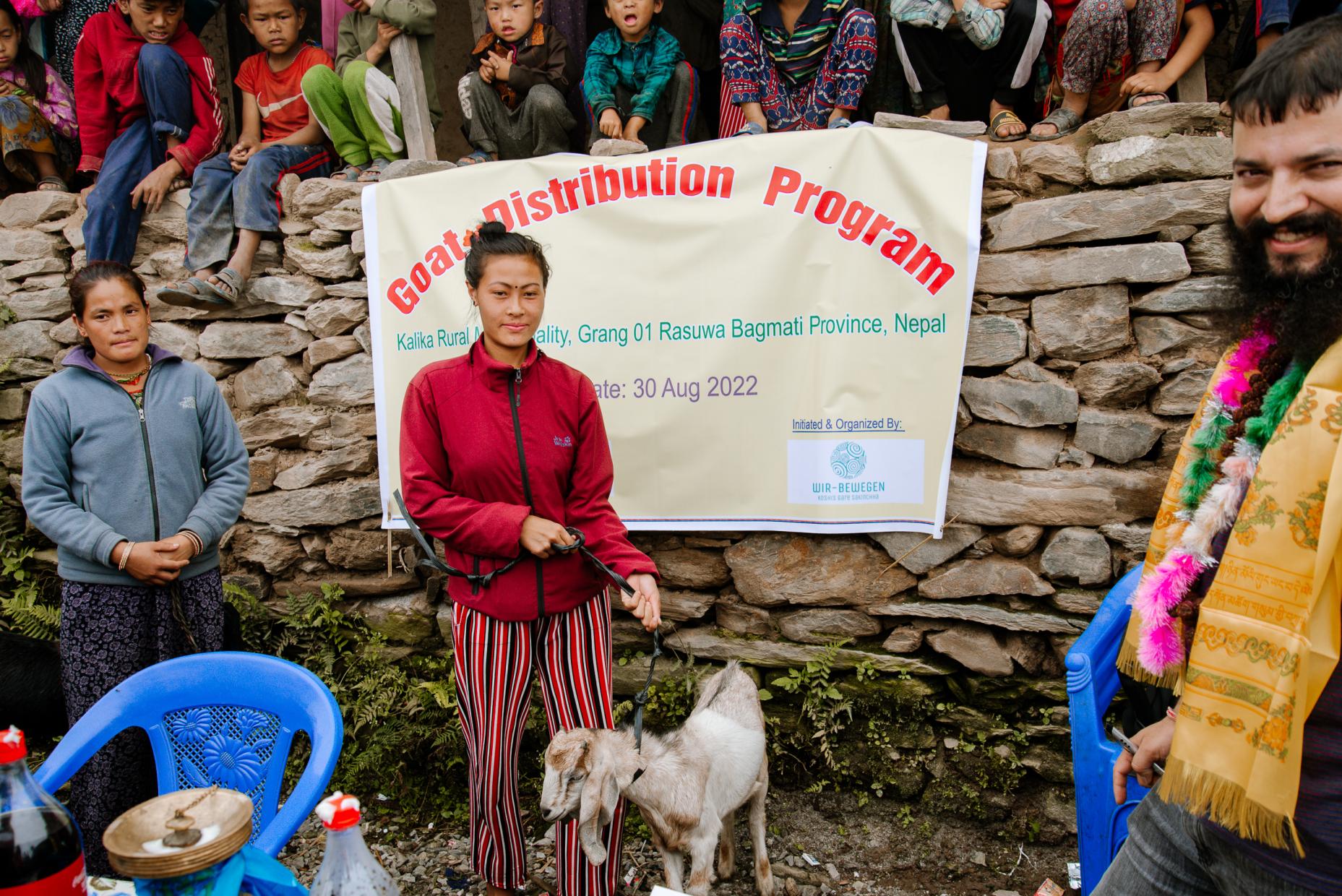
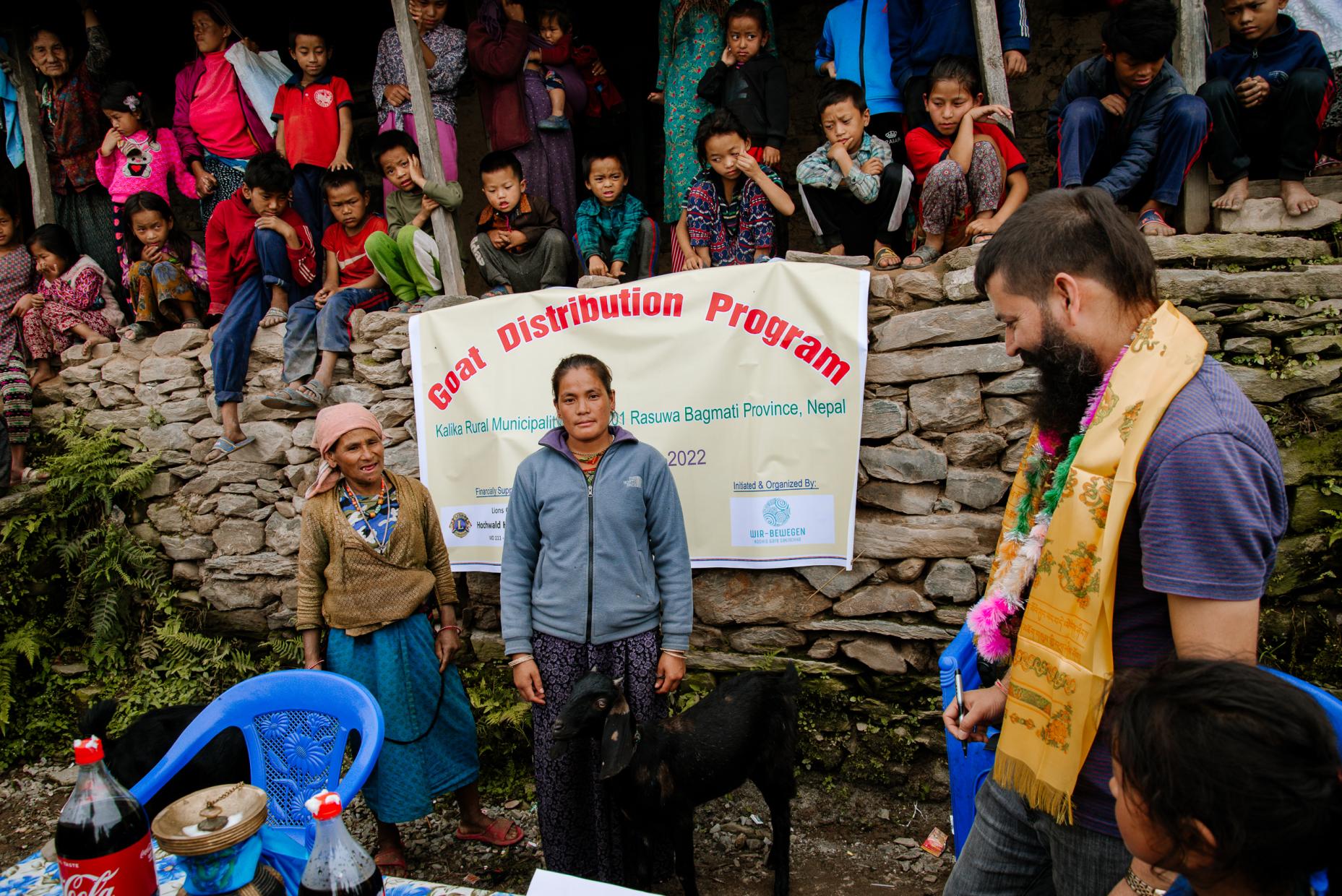
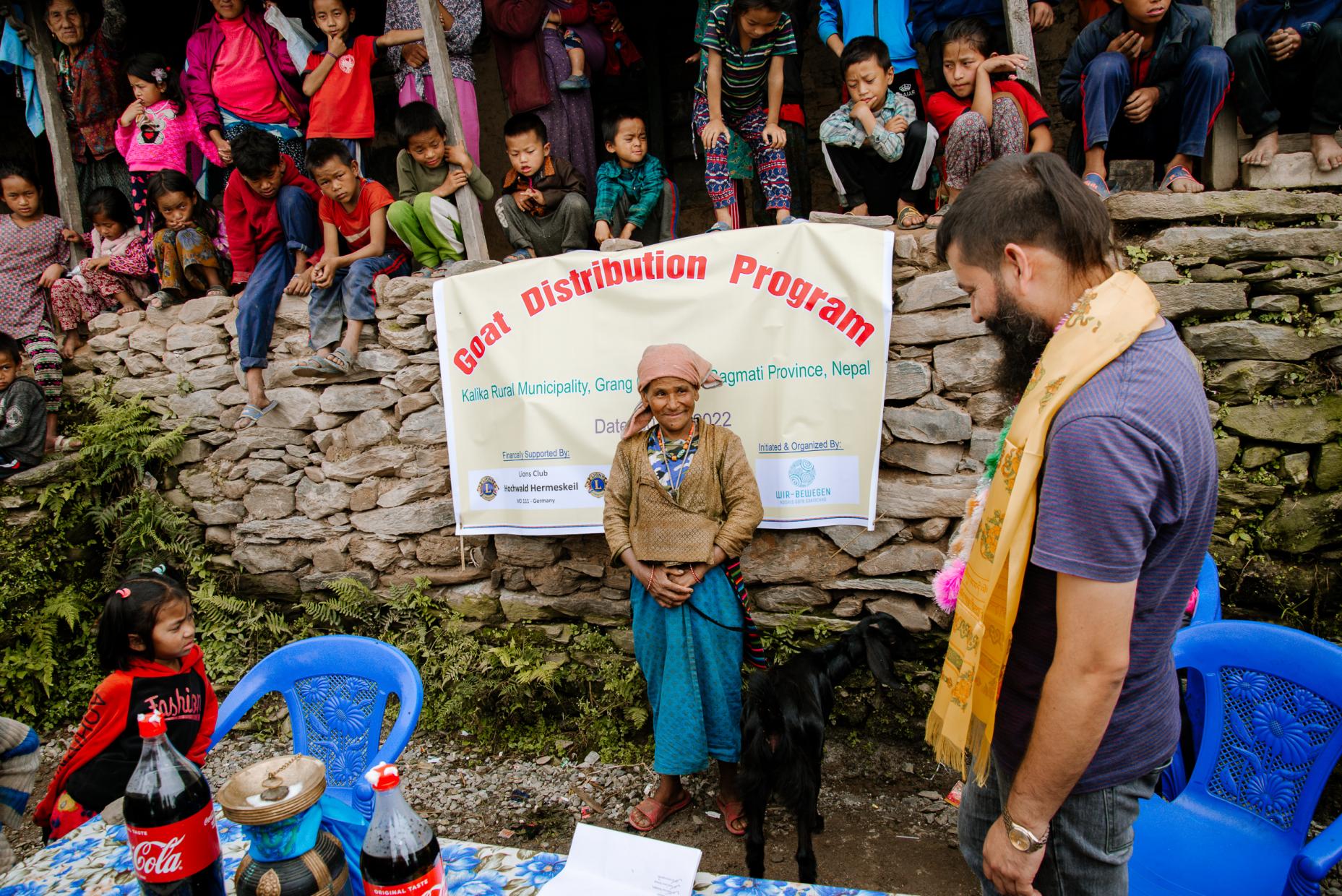
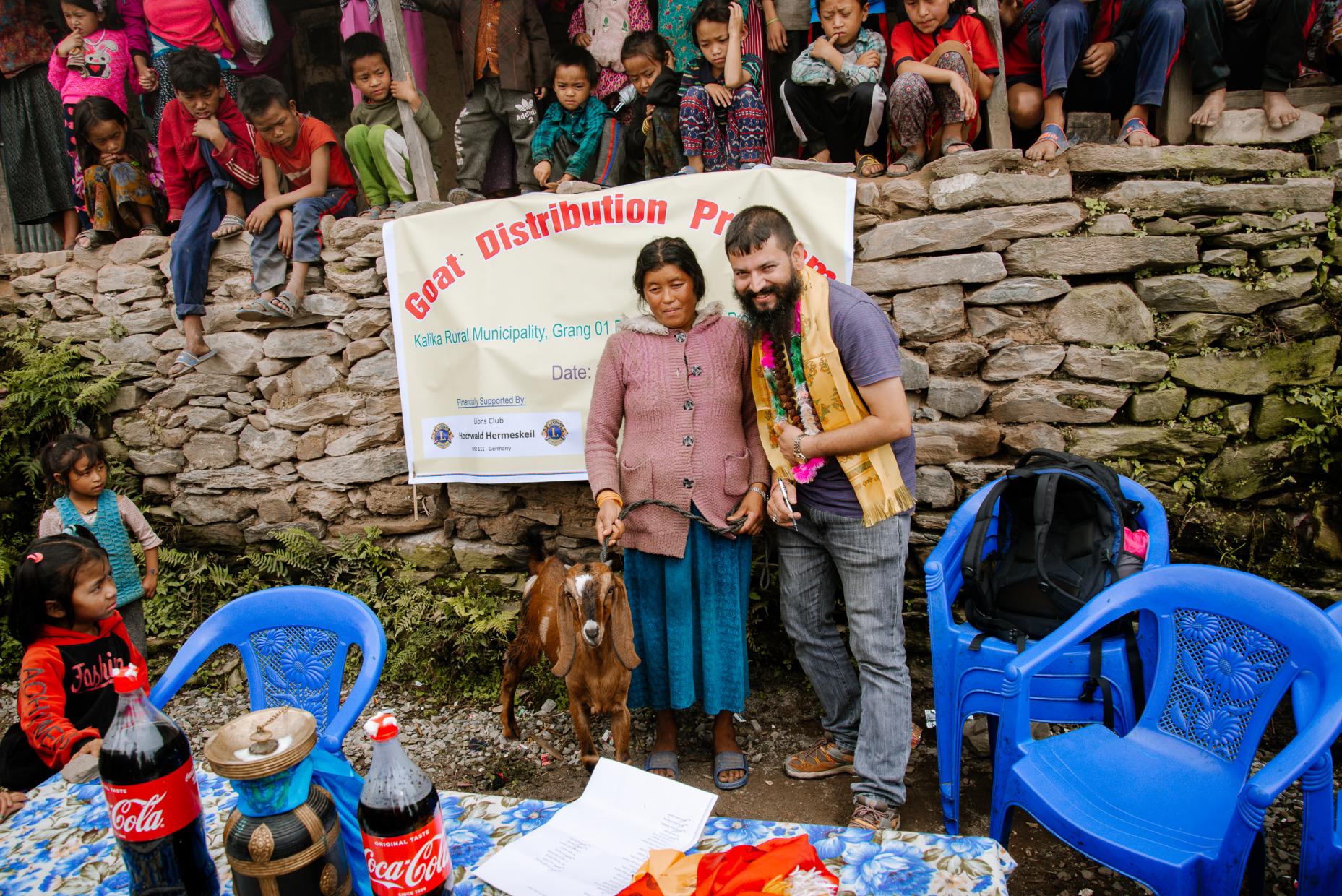
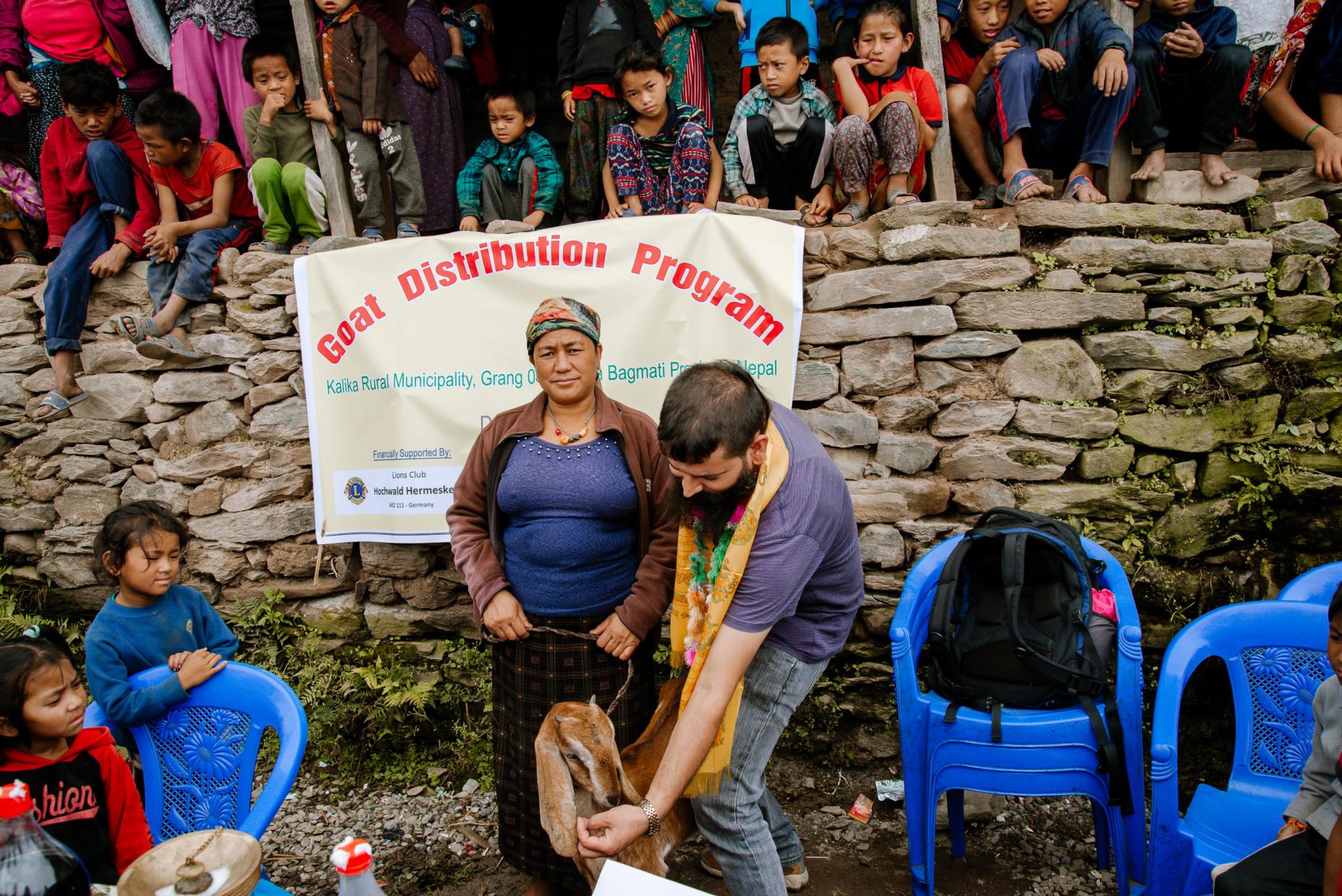
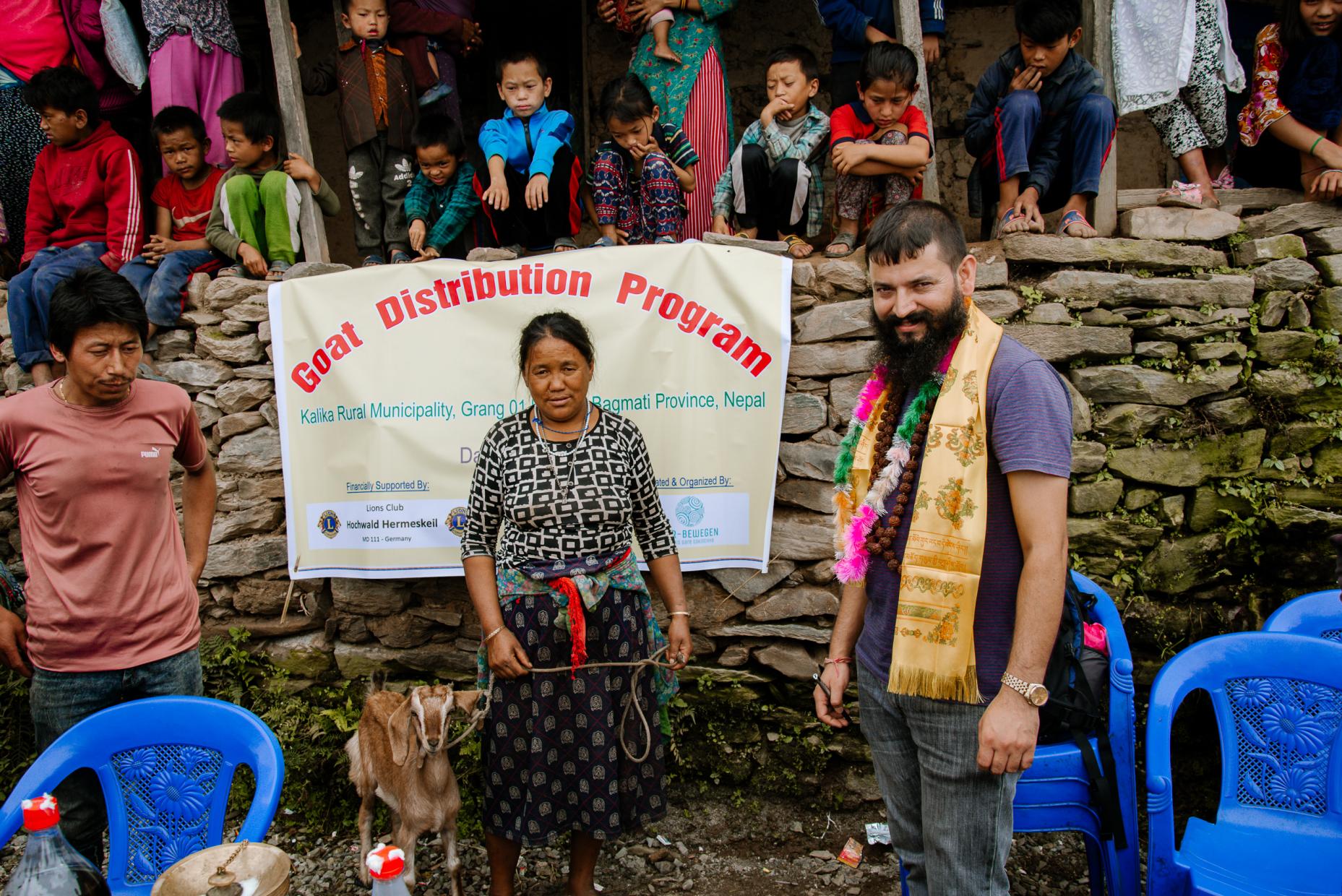
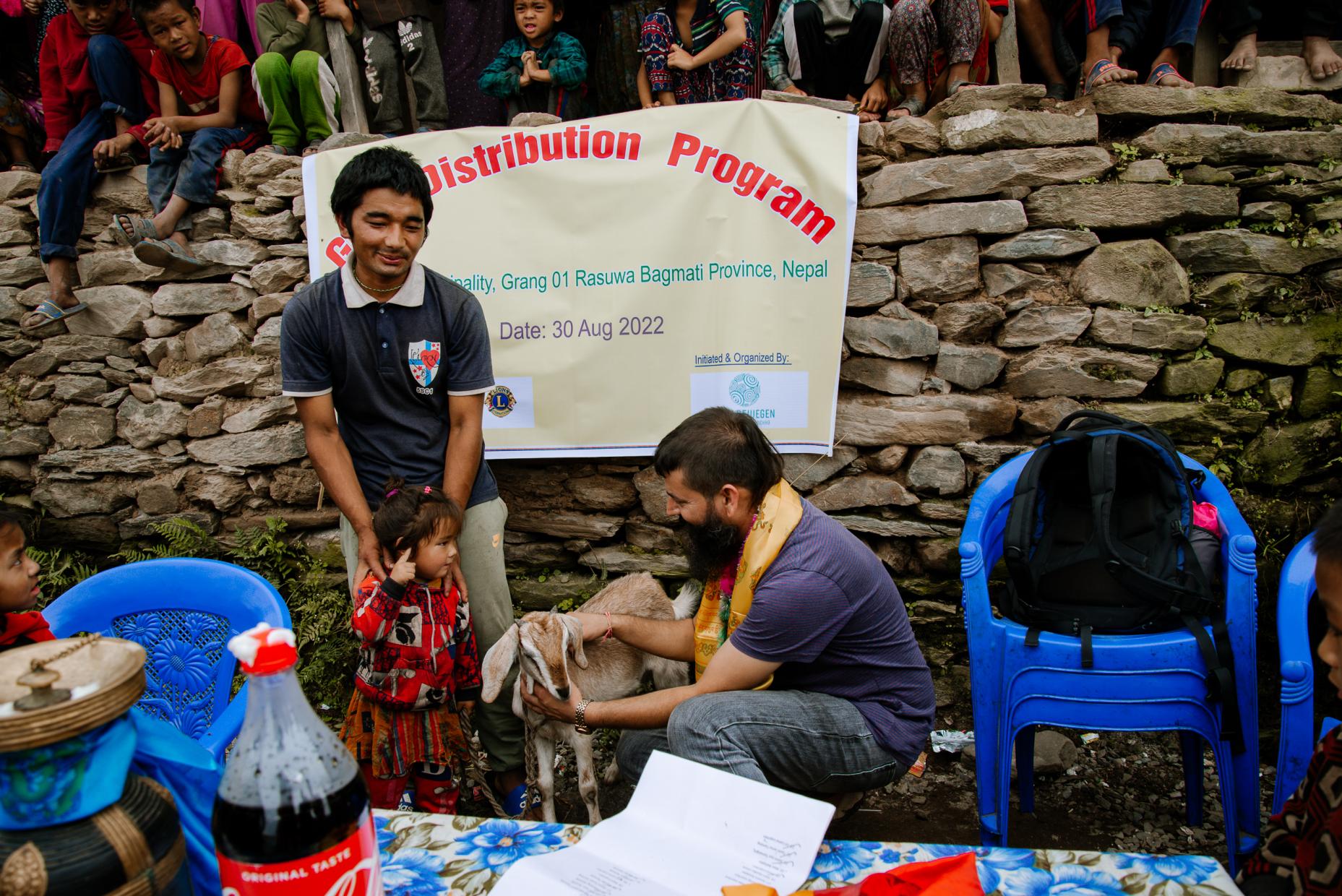
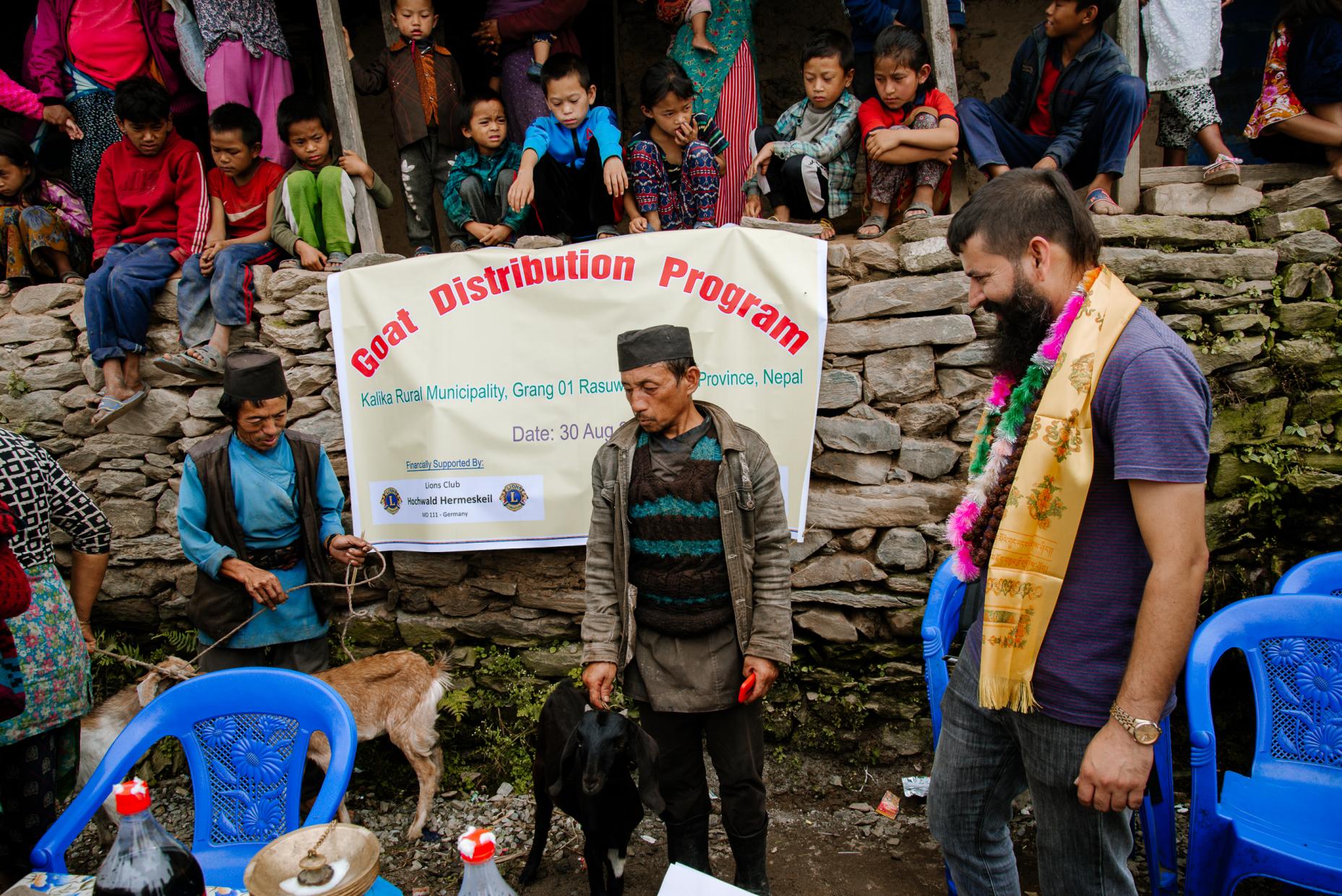
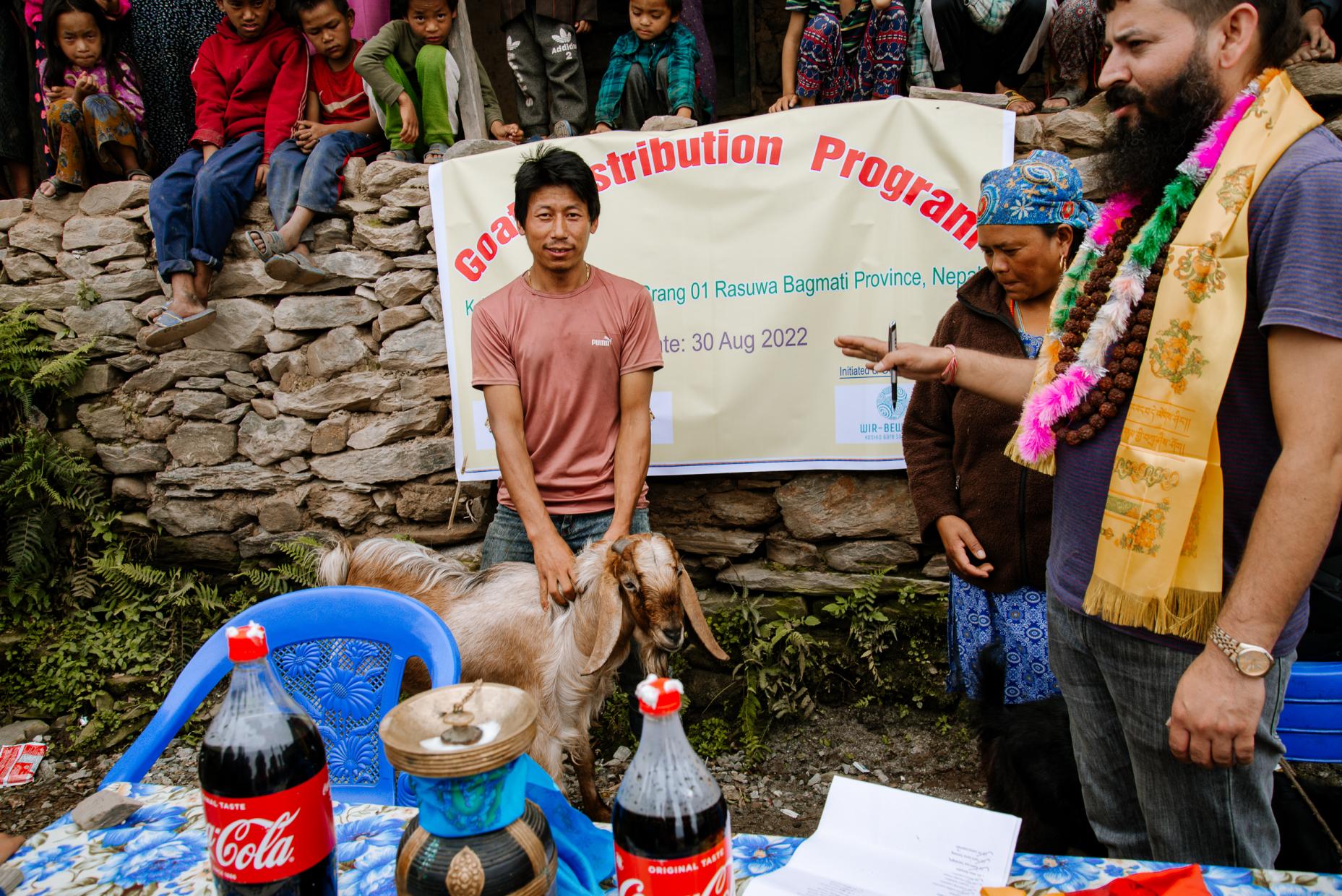
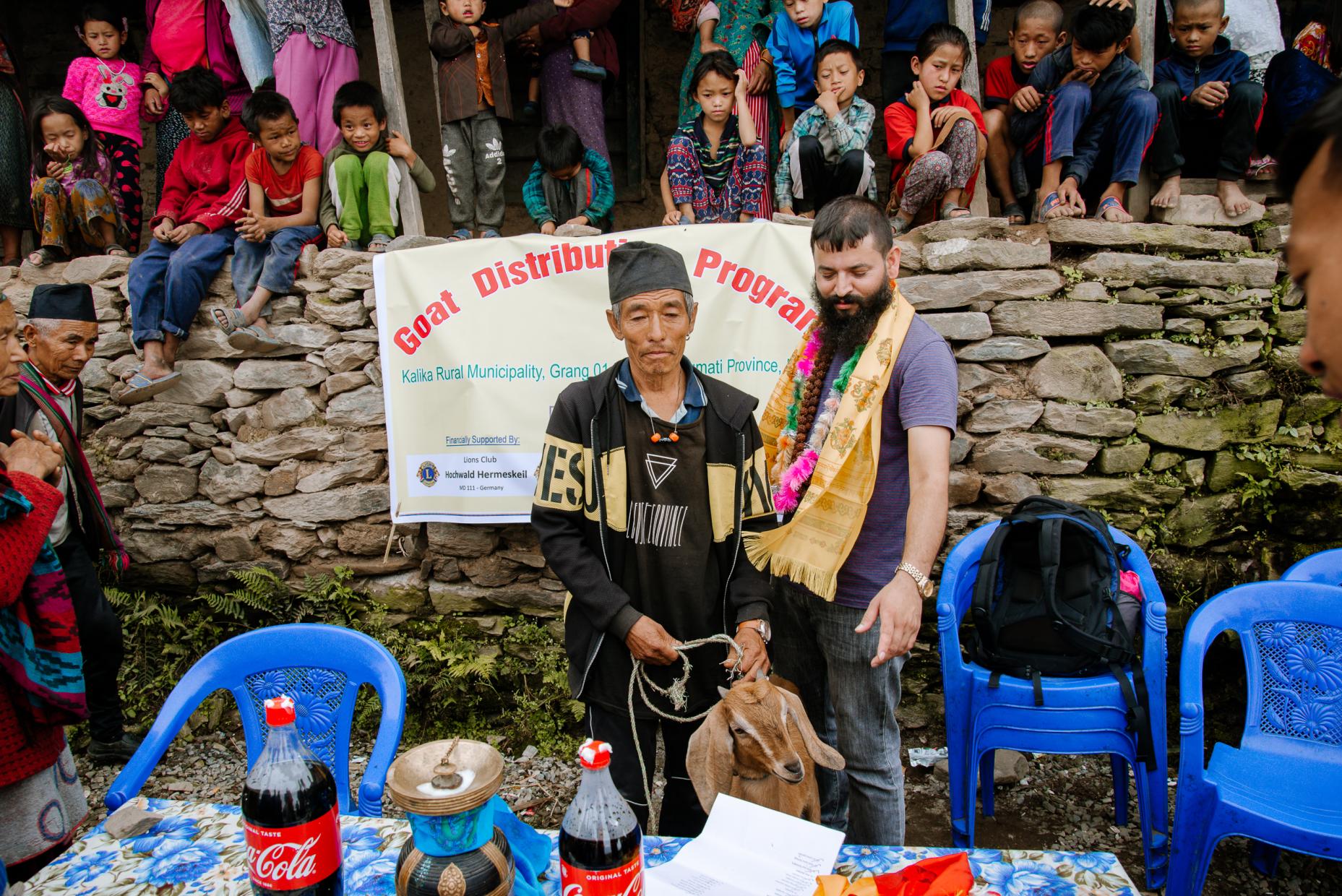
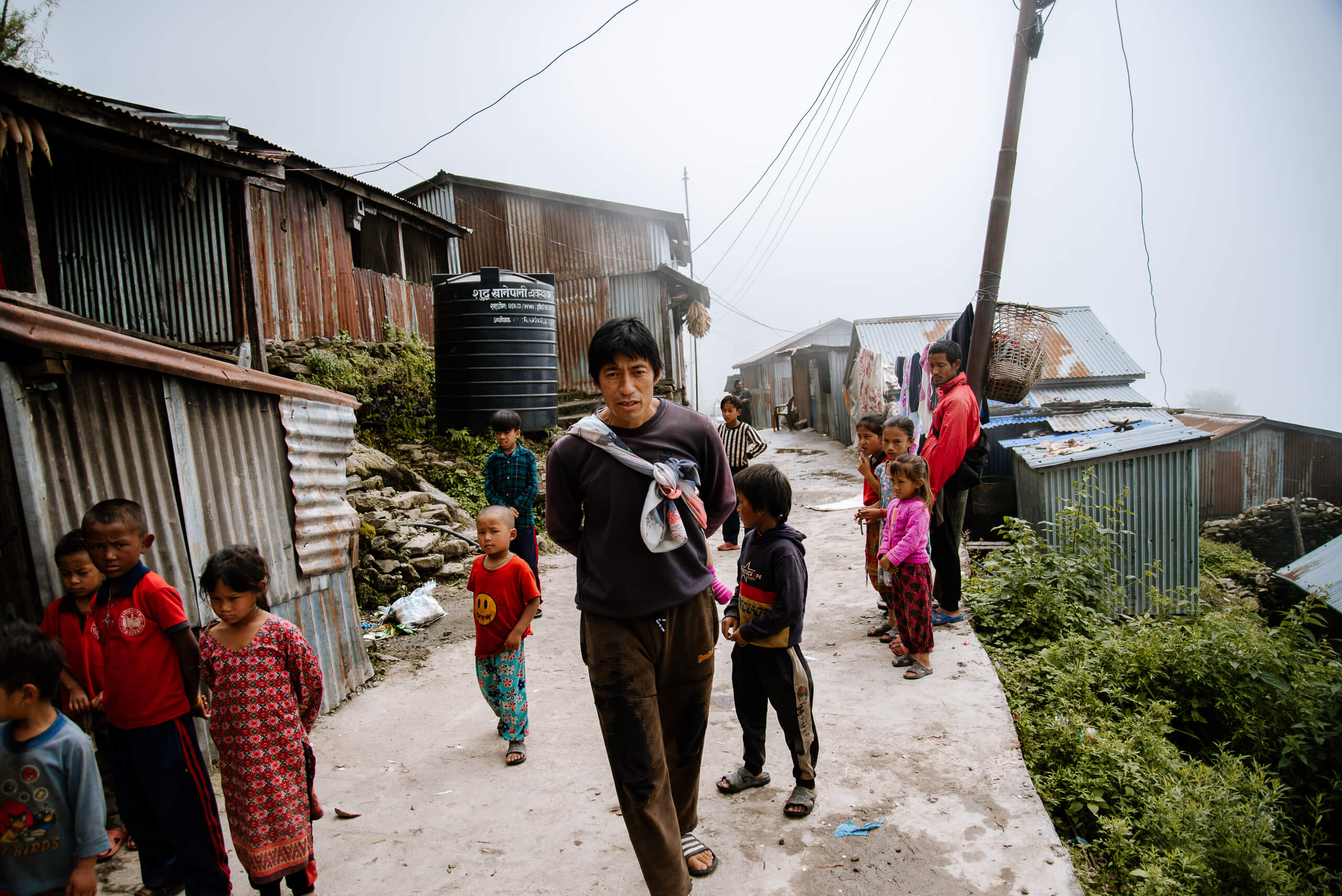
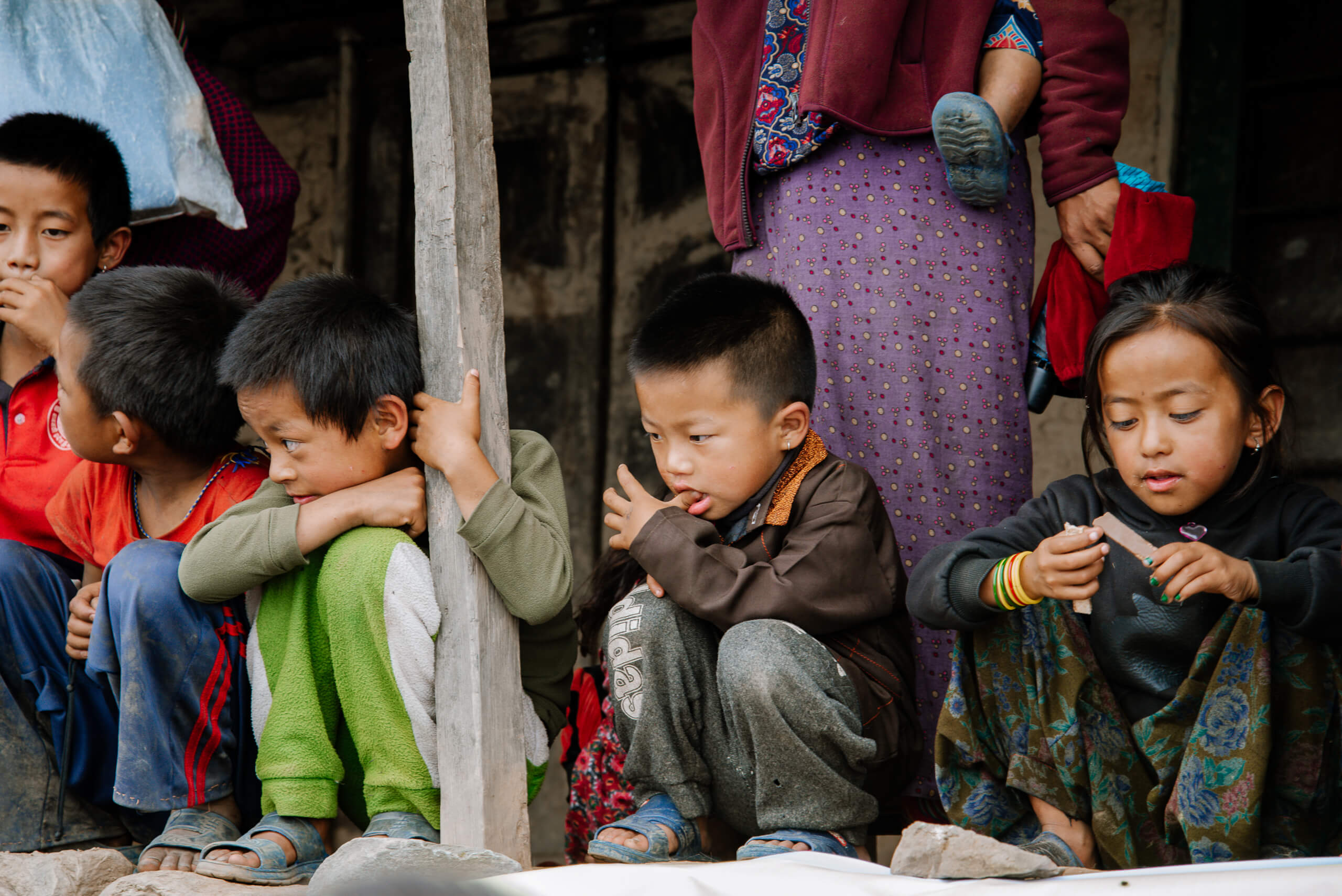
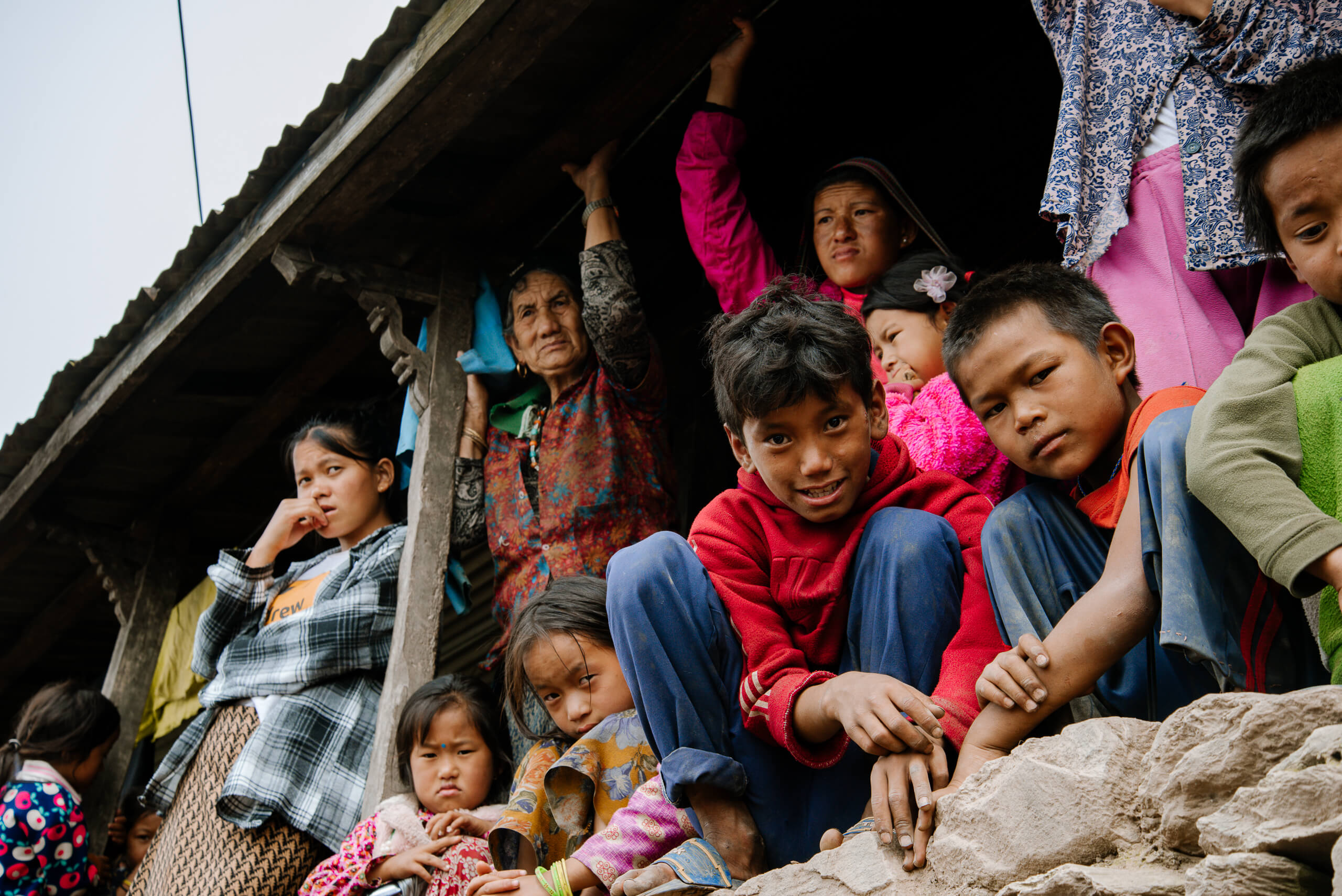
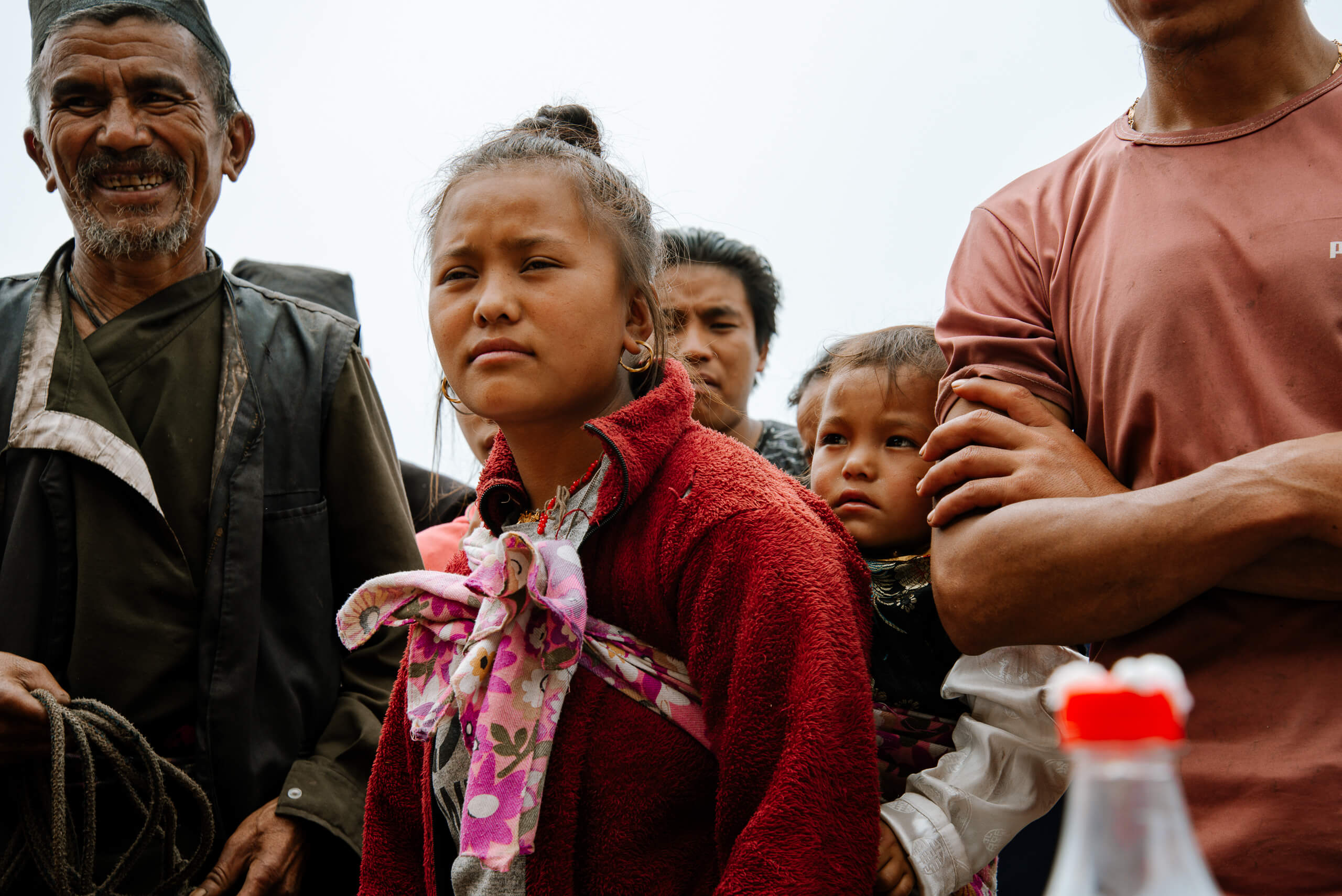
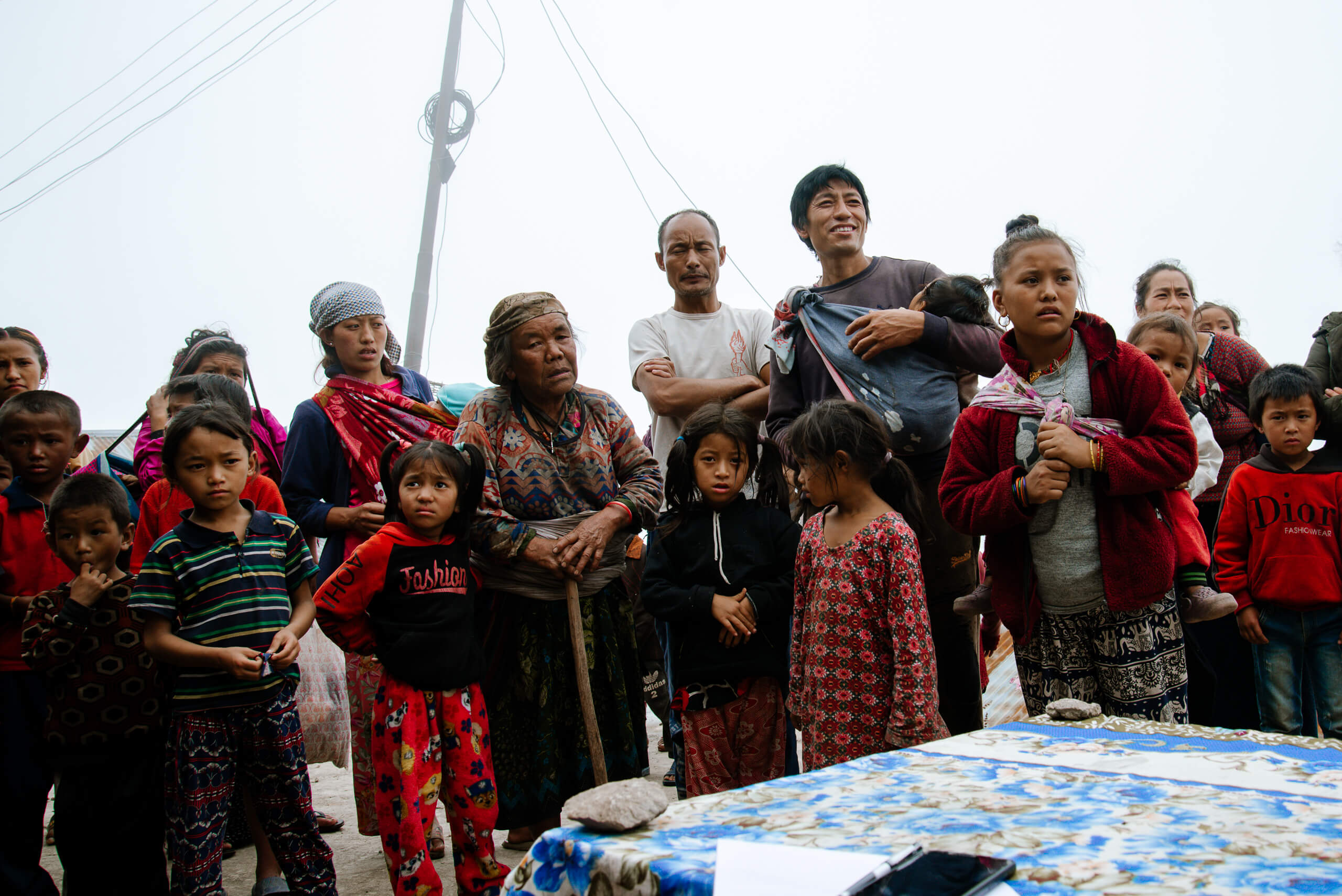
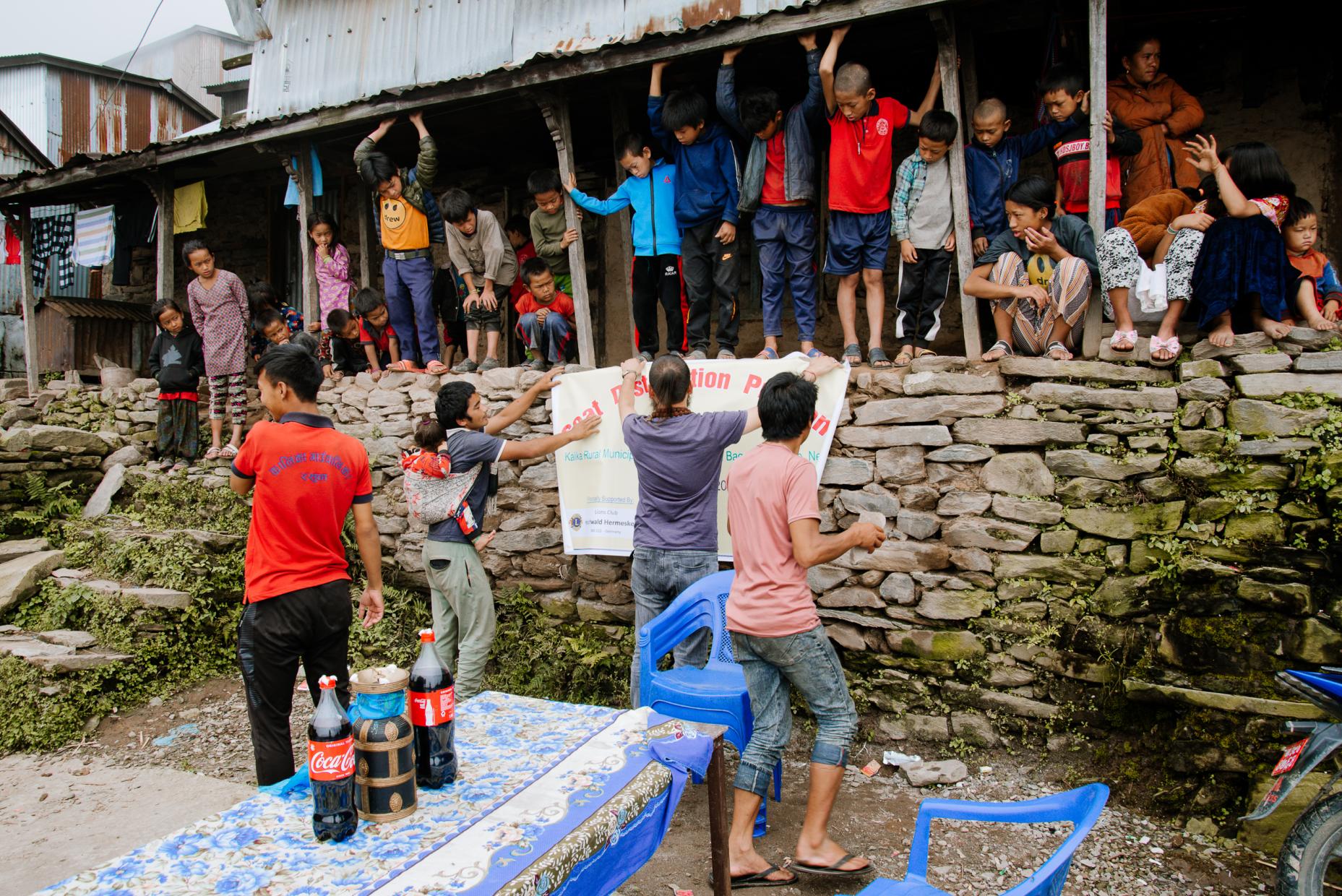
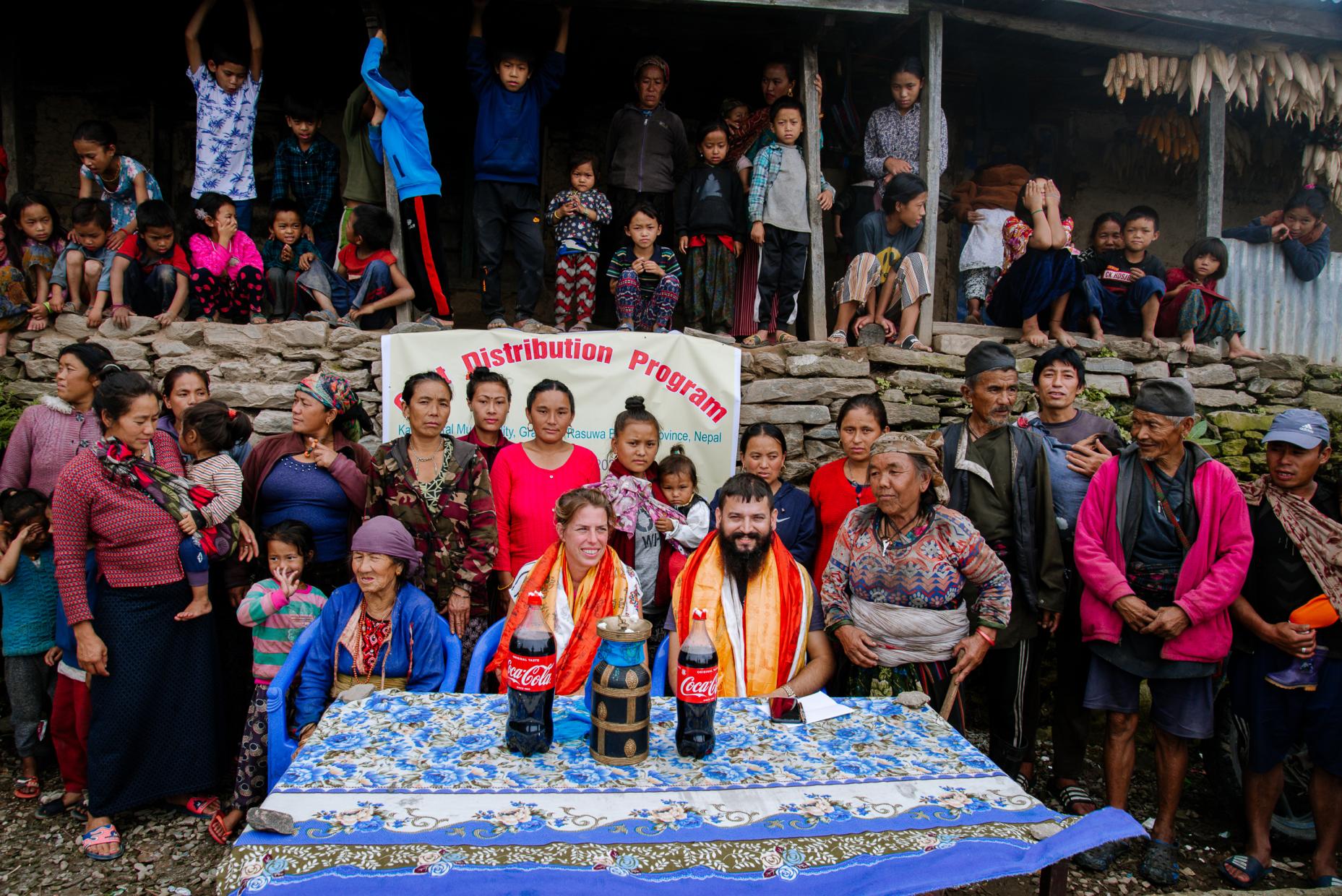
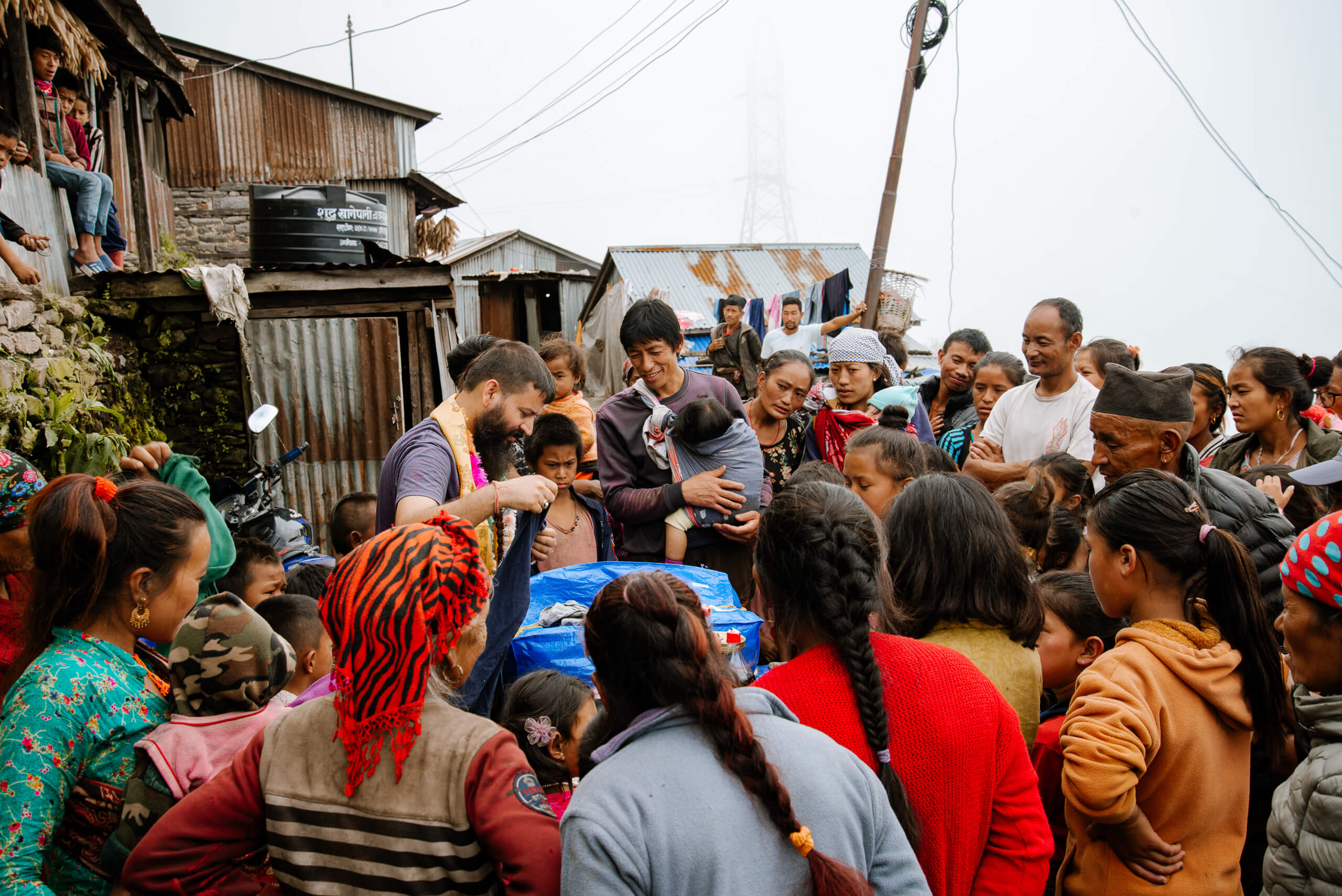
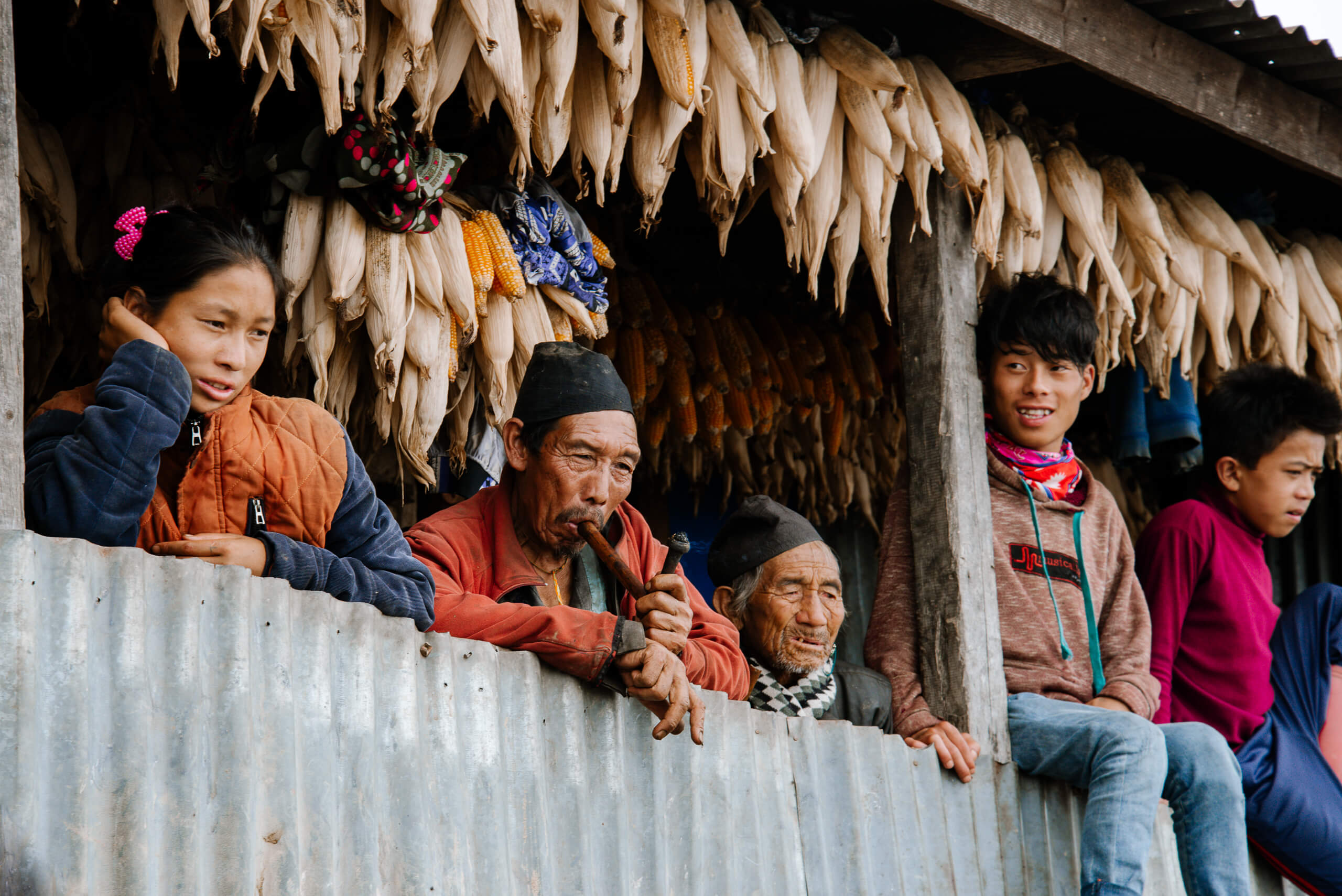
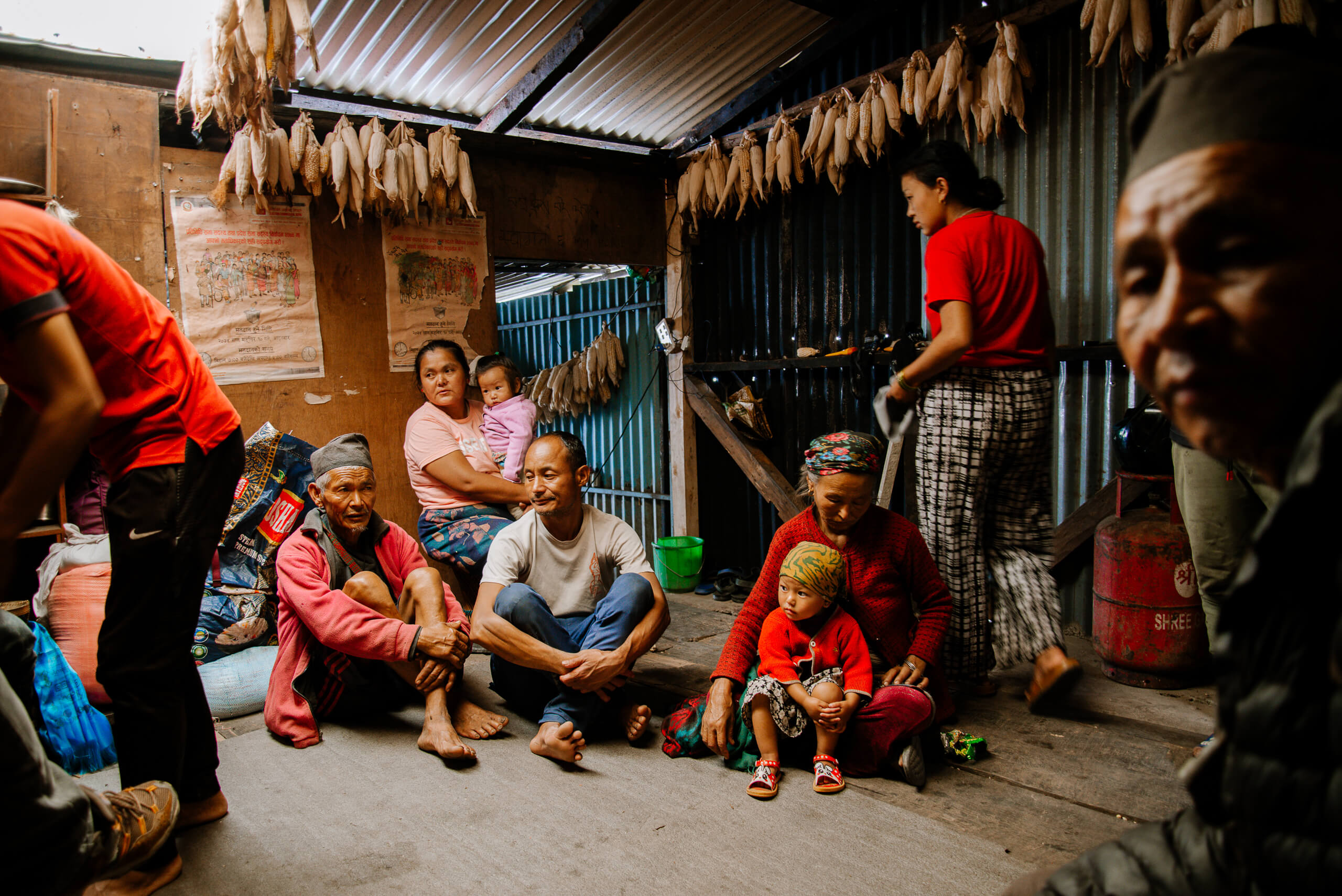
We finally reached the village at 1:30 p.m. The fog was thick, severely limiting visibility. The scene that greeted me was rather sad. Since the earthquake, perhaps only three or four families could afford to rebuild their stone houses – the rest still live in corrugated iron shacks. A table had already been set up at one of the larger houses. And no, Coca-Cola isn't a sponsor of our projects—cola is one of the few luxuries they can afford, and they wanted to share it with us as a token of their gratitude. That's why the two bottles are on the table. The banner we had made the day before in Kathmandu was put up, and more and more villagers gathered. So many children, so incredibly many children, were standing around. My heart grew even heavier, as I now knew I had brought far too few children'sclothes .
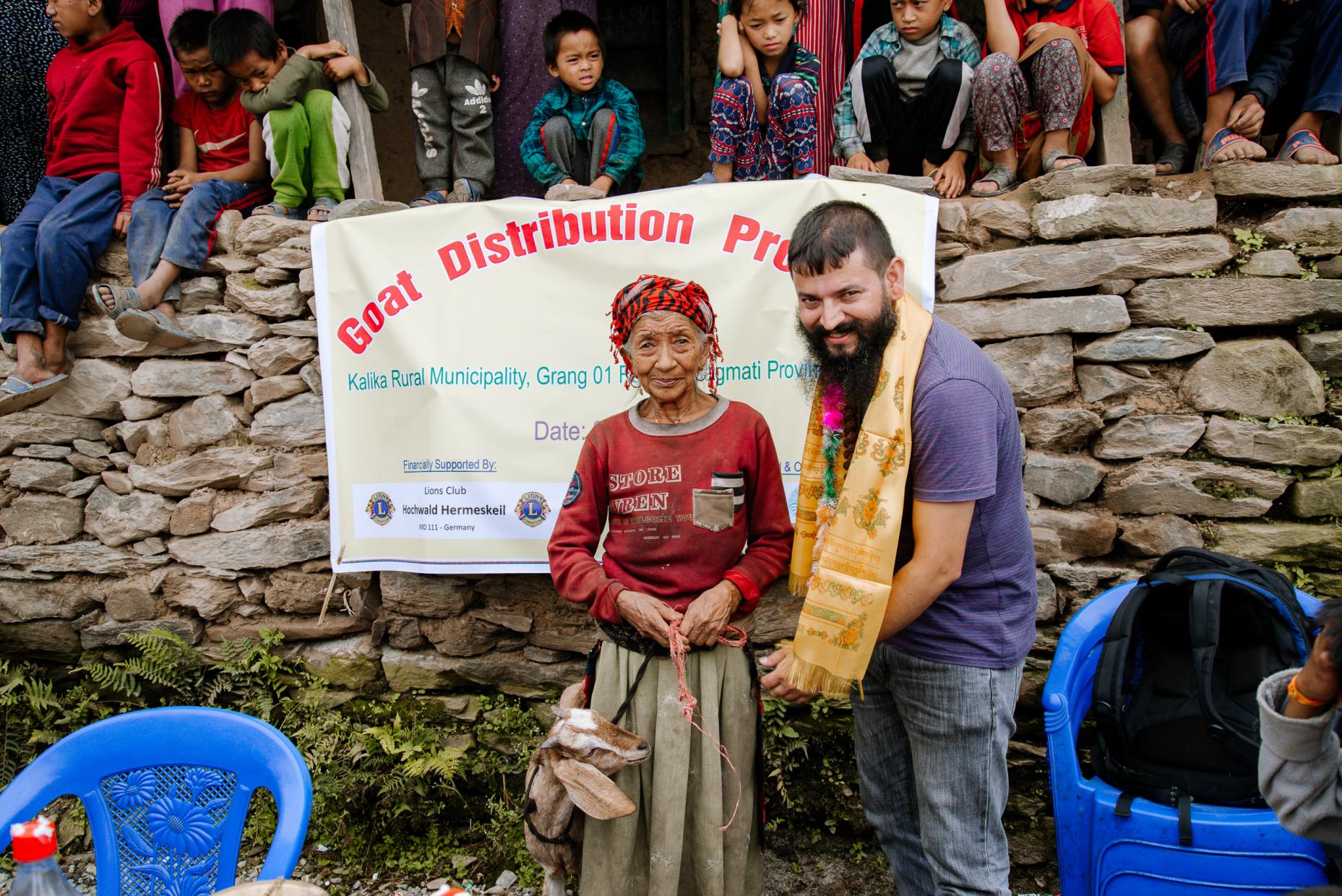
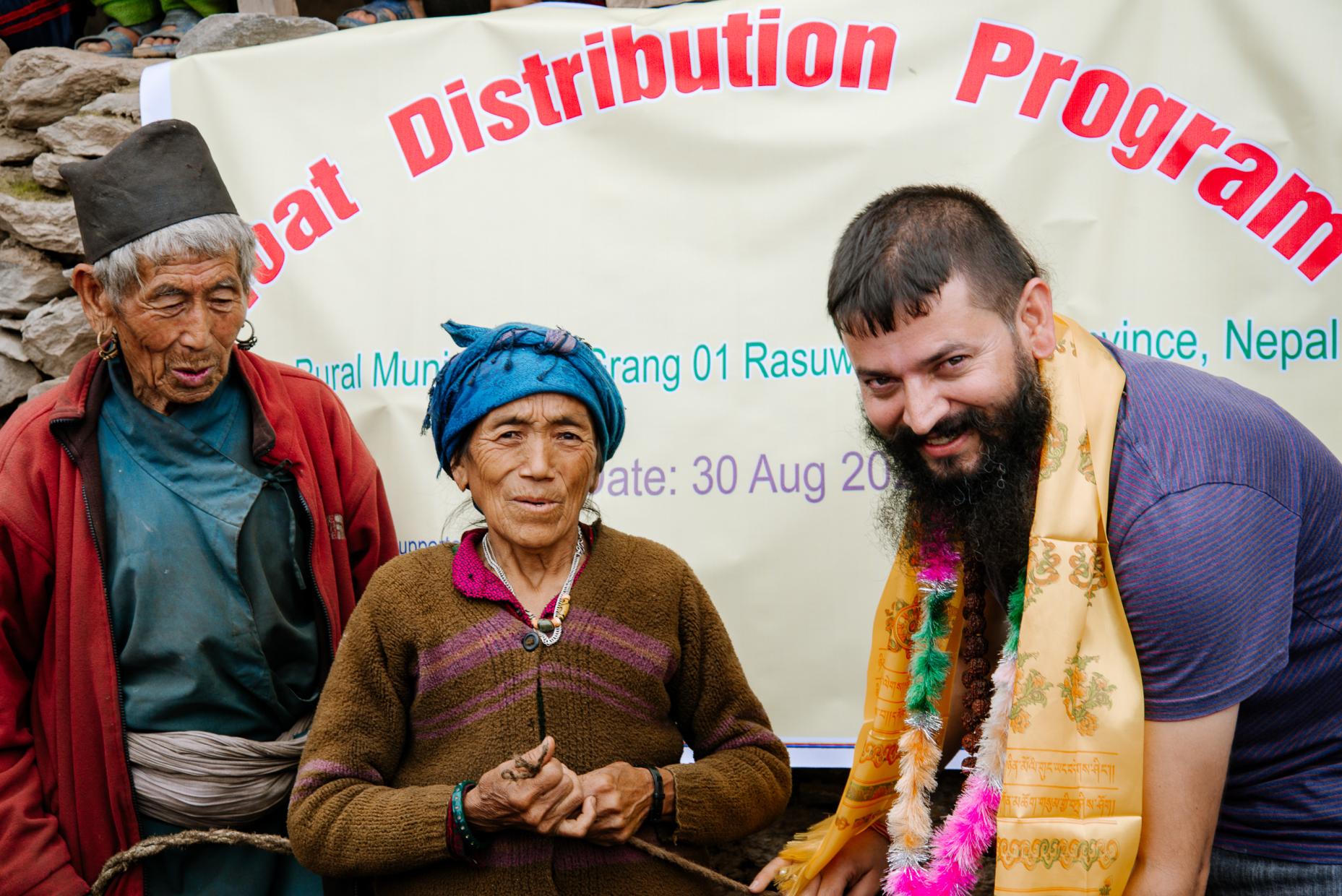
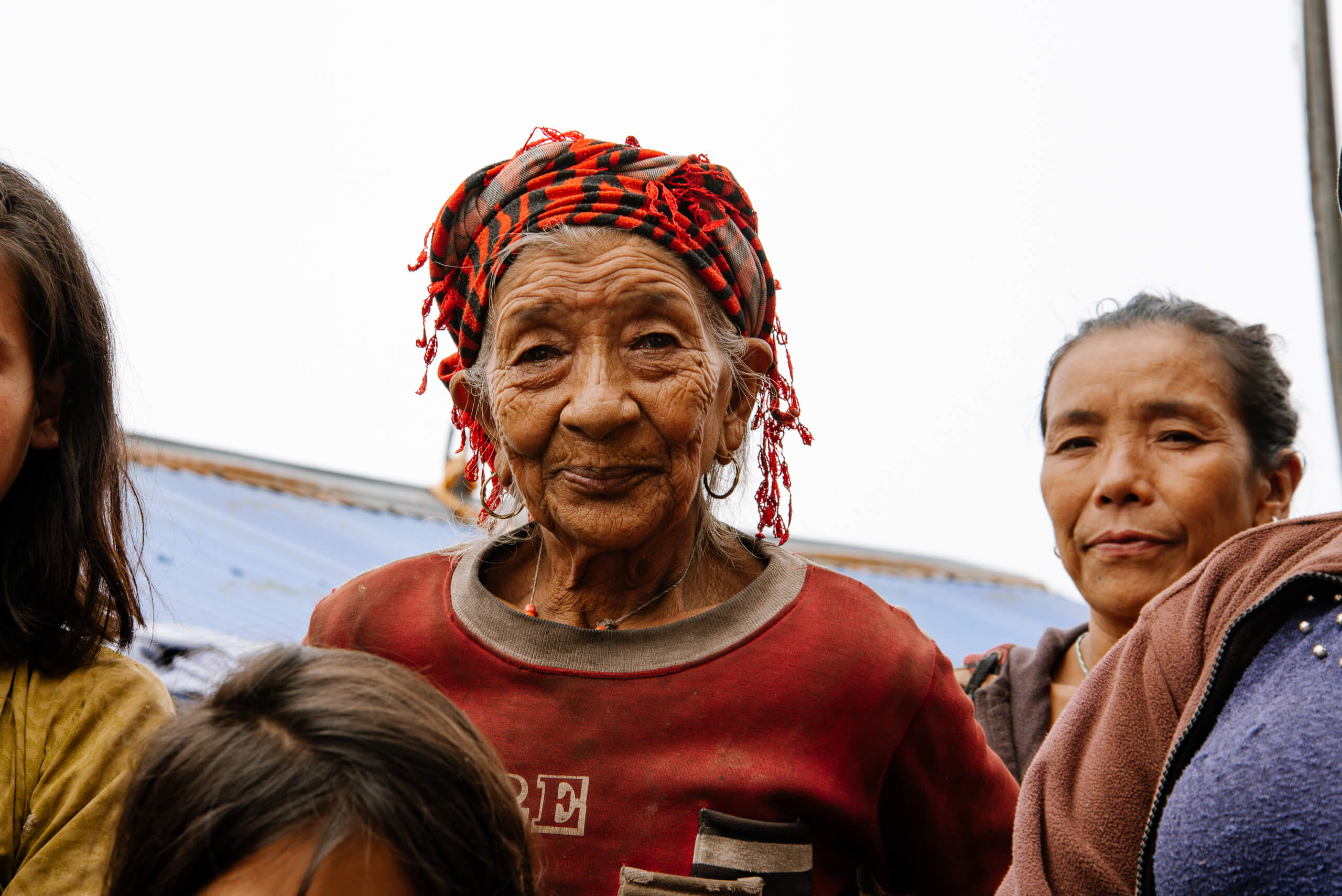
We were, of course, eyed skeptically, some even with suspicion. But especially the older people had incredible gratitude in their eyes when our eyes met. These looks, saying so much without words, are something I experience again and again in Nepal.
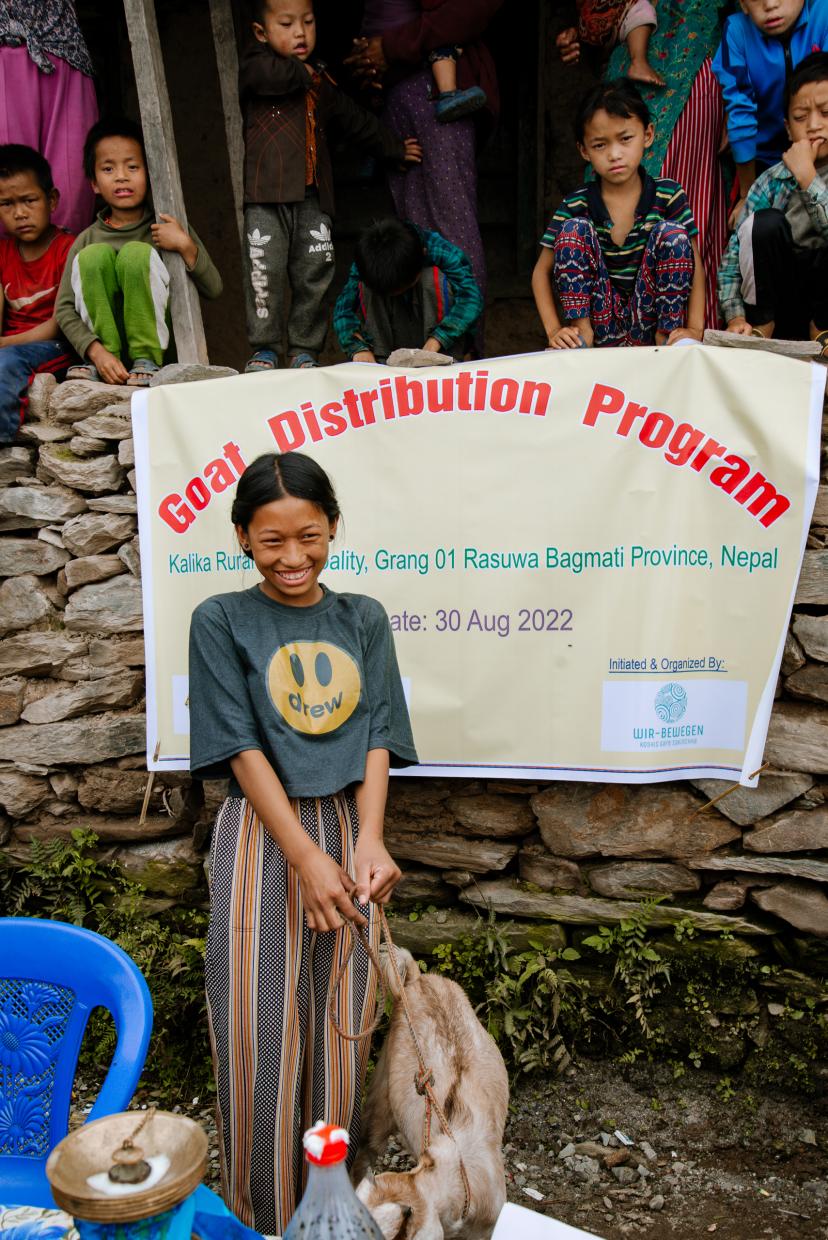
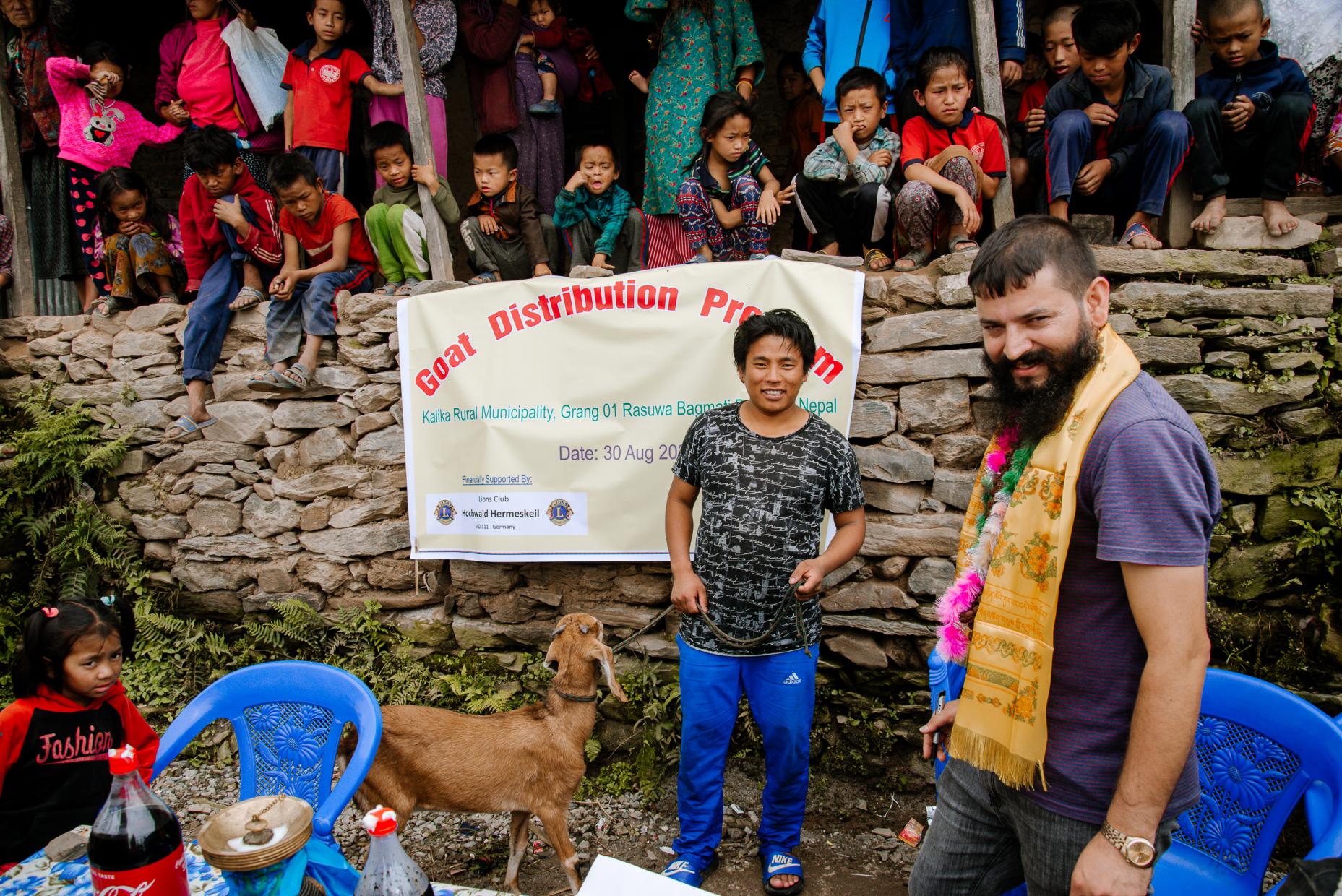
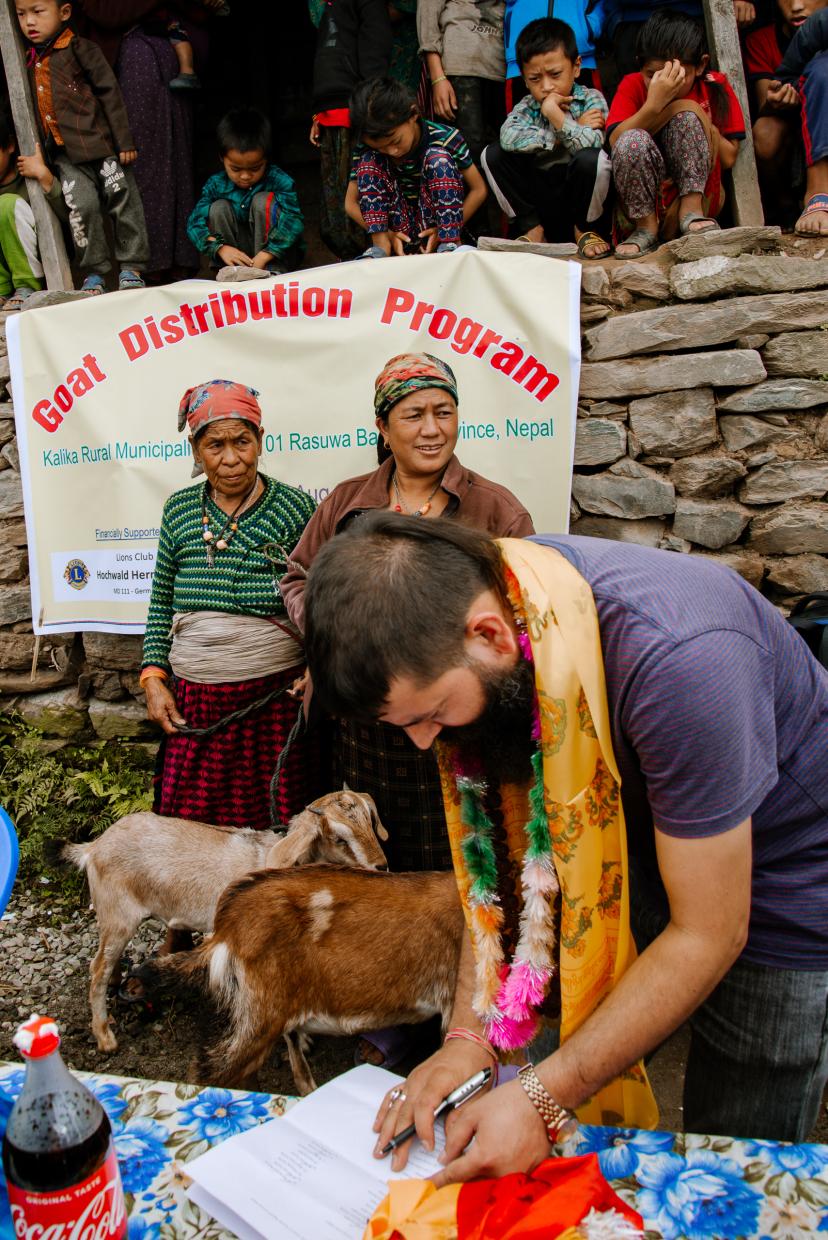
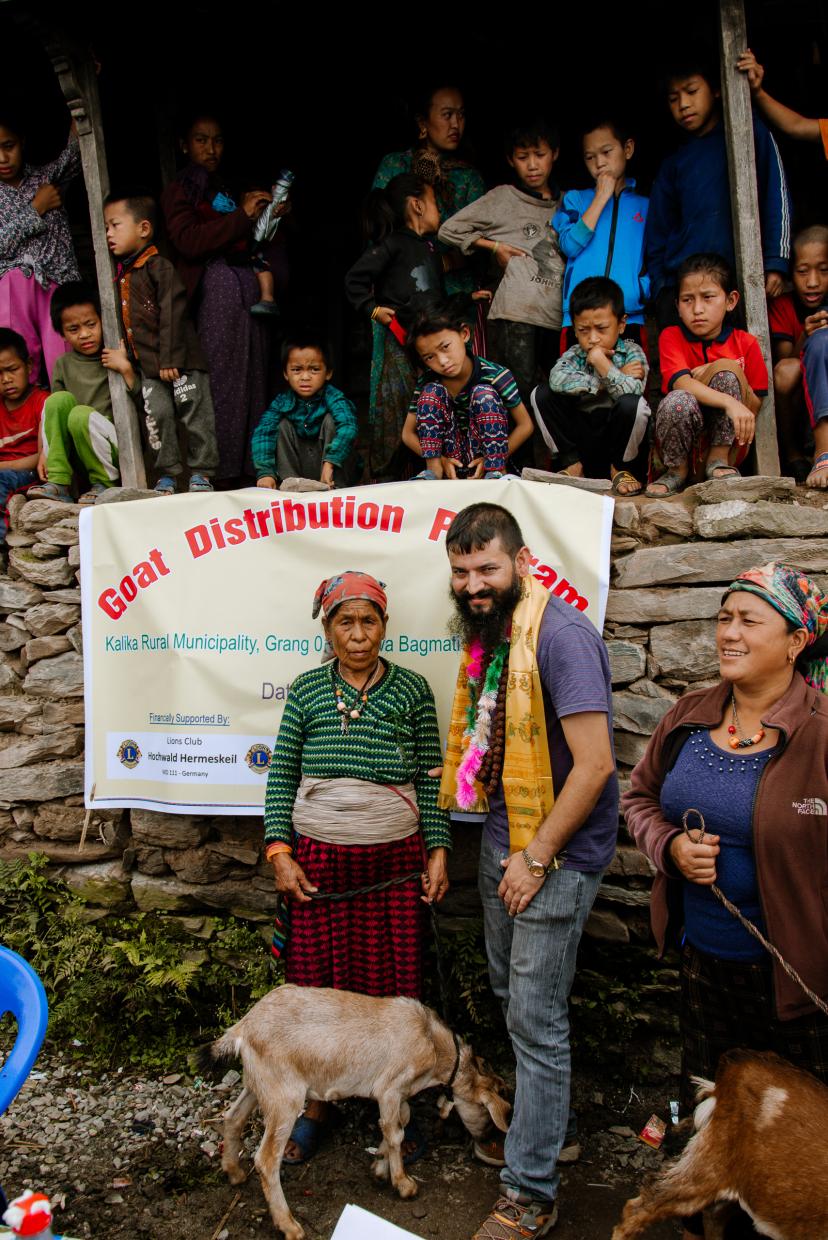
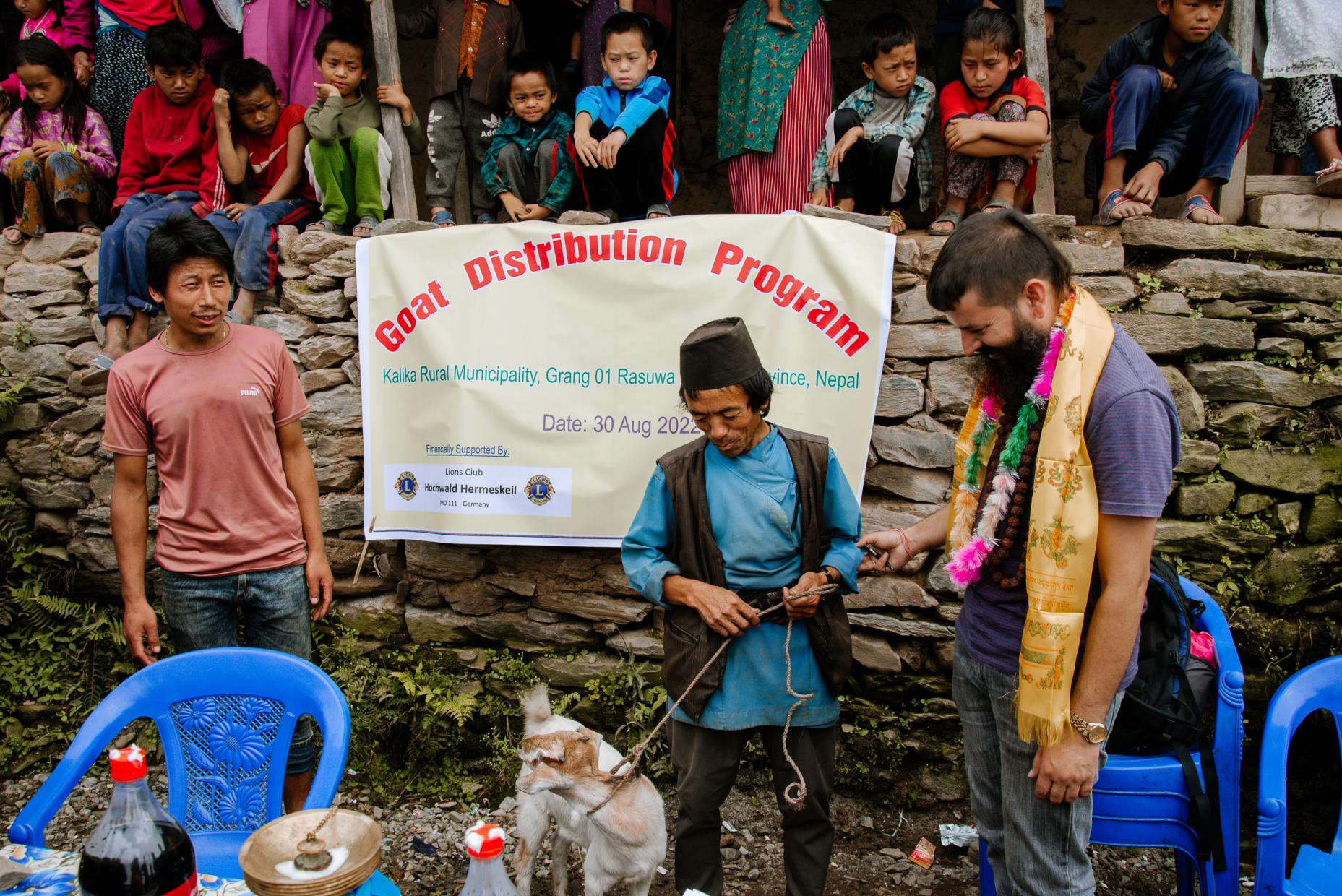
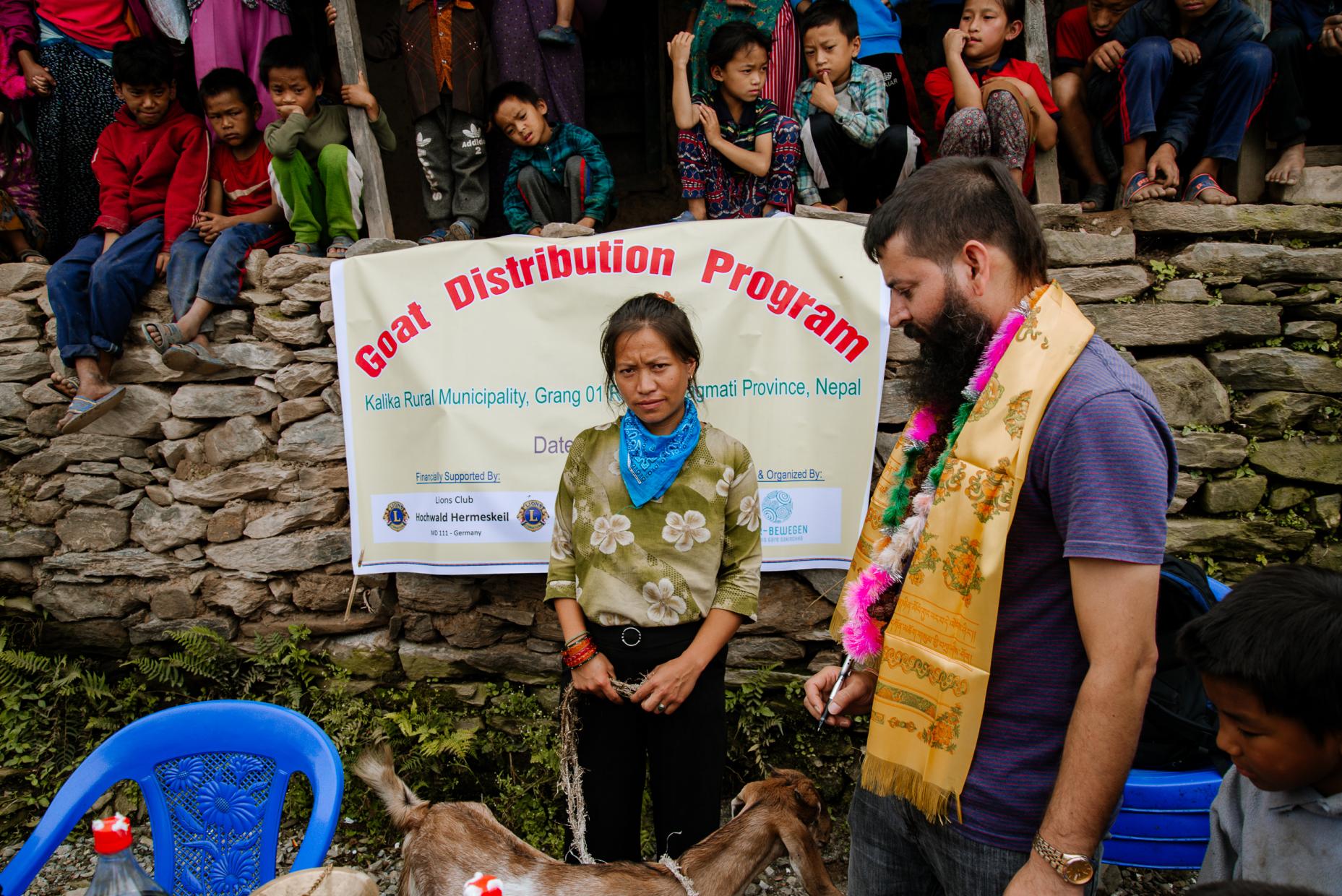
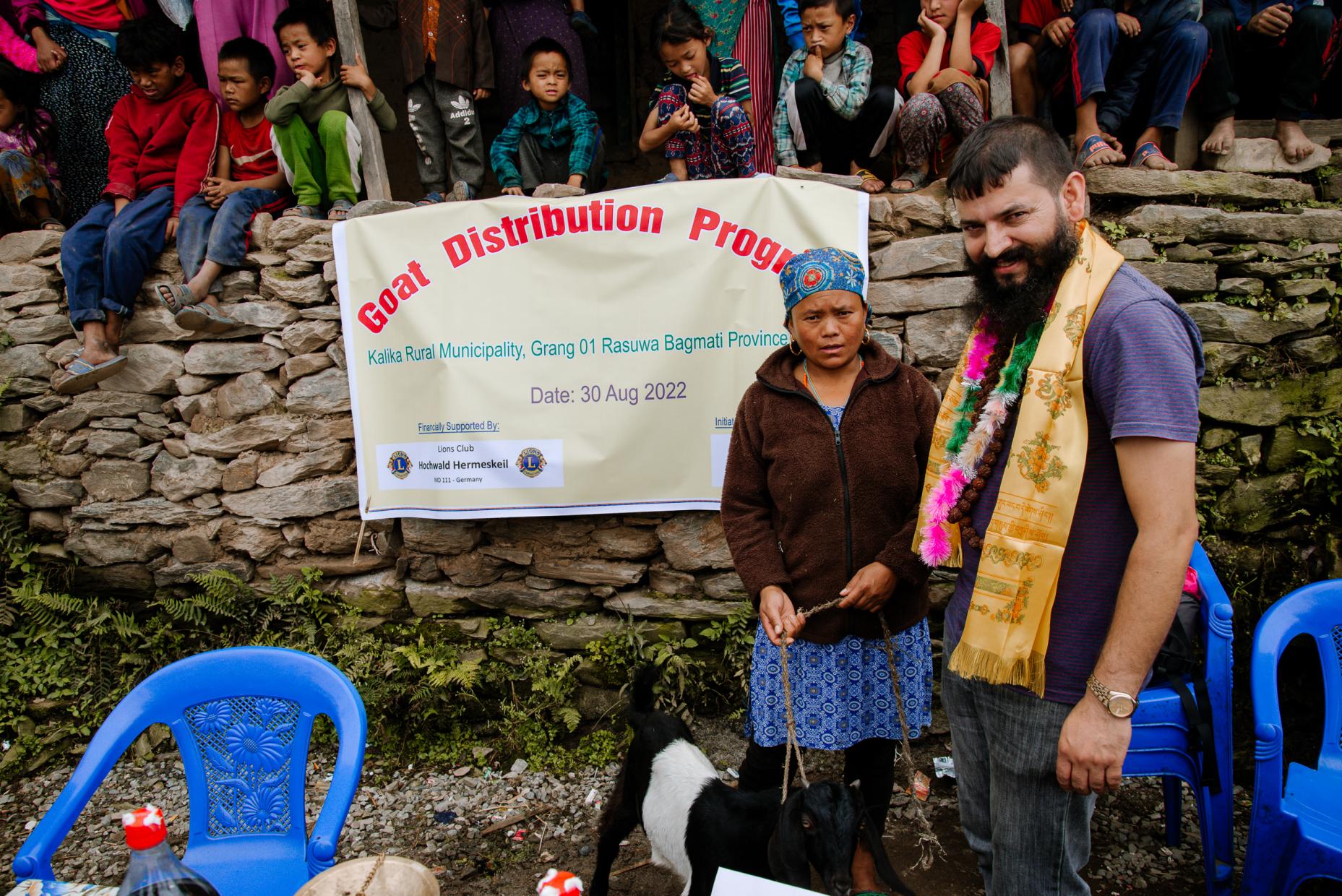
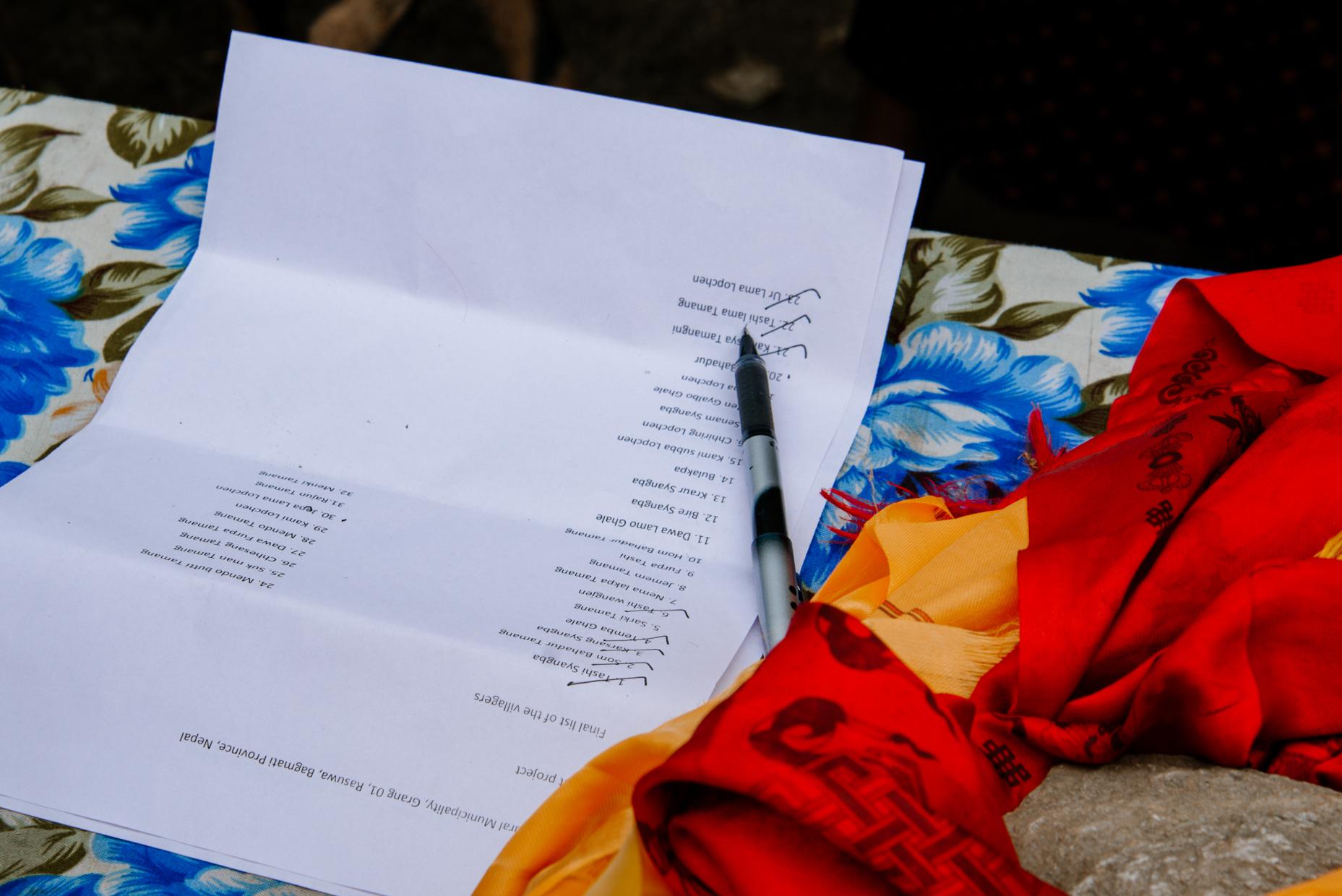
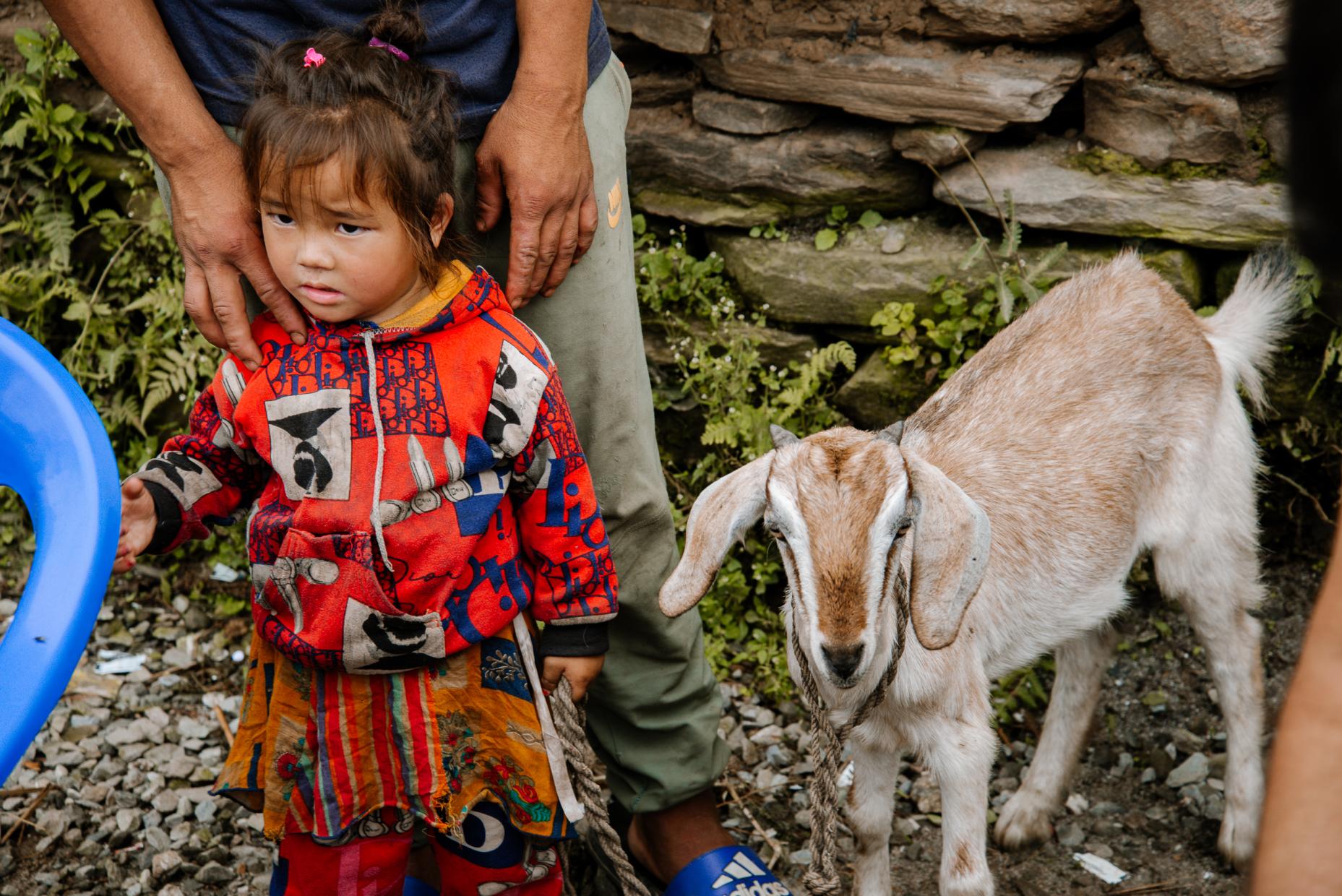
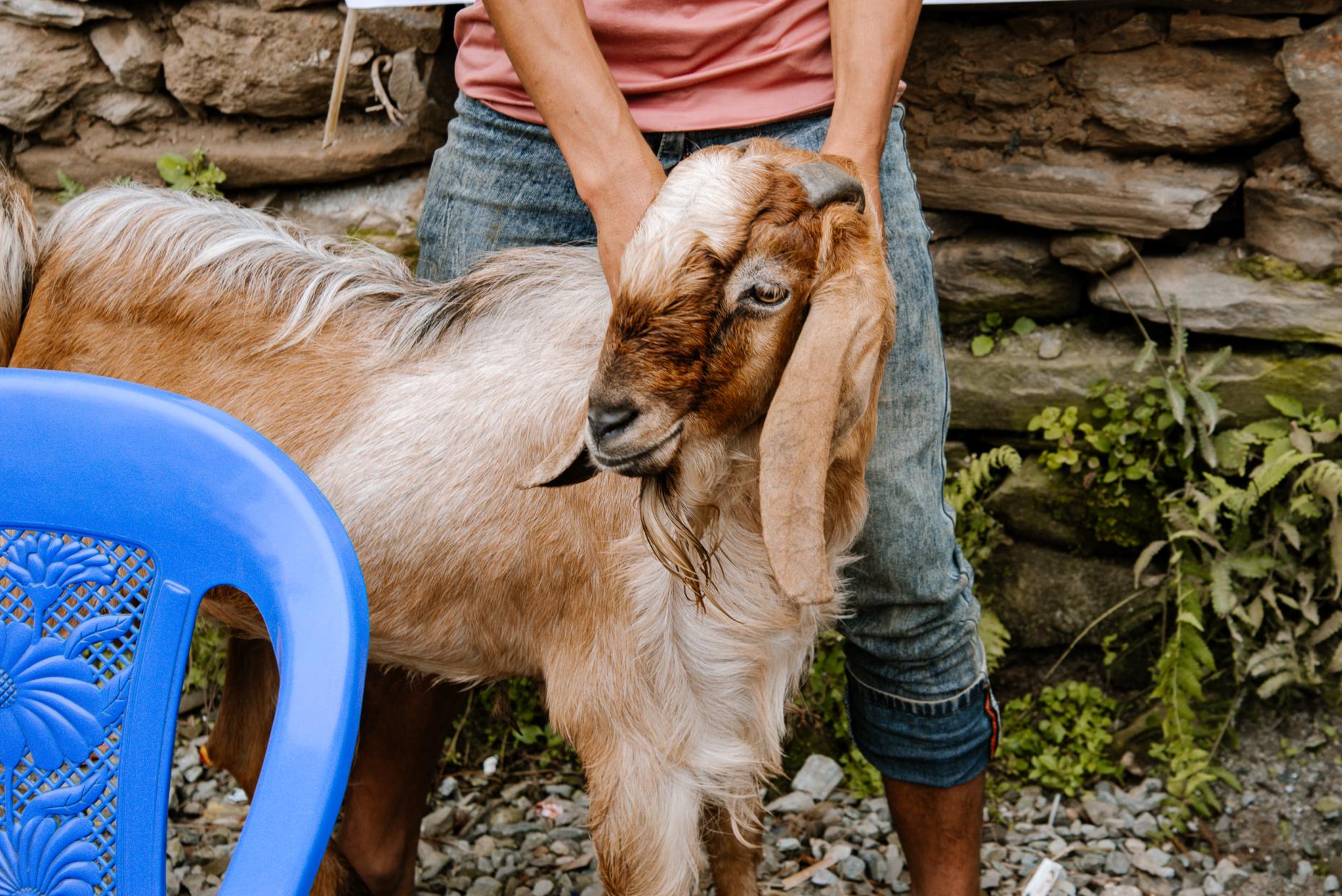
Then, the names were called out from the list, and the people proudly presented their animals. The breeding ram was also presented. Some offered additional words of thanks—but everyone showed in their own way how much this animal meant to them. After the ceremony, the Clothes distributed. Narayan and I are used to children patiently queuing up in Bhumesthan, waiting for something their size to be picked up; but because of the limited selection, some mothers rushed forward and grabbed what they needed directly from the table. I could understand it—and at that moment, I firmly resolved Clothes to send
Afterward, we were invited into various houses. Apart from boards serving as beds, there was absolutely no luxury to be seen. On average, eight people live in the two rooms.
Then it was time to head back. We reached Kathmandu around 7:30 p.m. Exhausted, but also content and happy.
In my opinion, Narayan had once again done a very, very good job! I've been to quite a few places in Nepal now—everywhere, people are in need. Of everything I've seen in Nepal so far, Grang among the most destitute.
We sat there for a while longer and talked about our "work," which we've now been doing together for seven years; also about how wonderful it would be to support a needy village with animals every year or two. goat project became Granga long-term goal: "Goats for Needy Villages"...
















Handover ceremony